



 Home/News/Company News
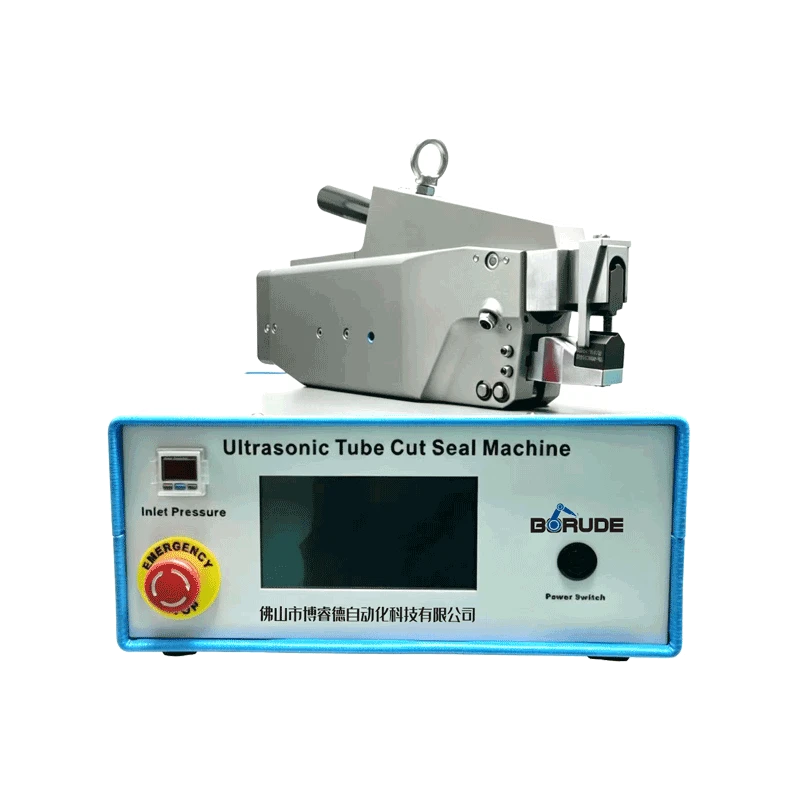
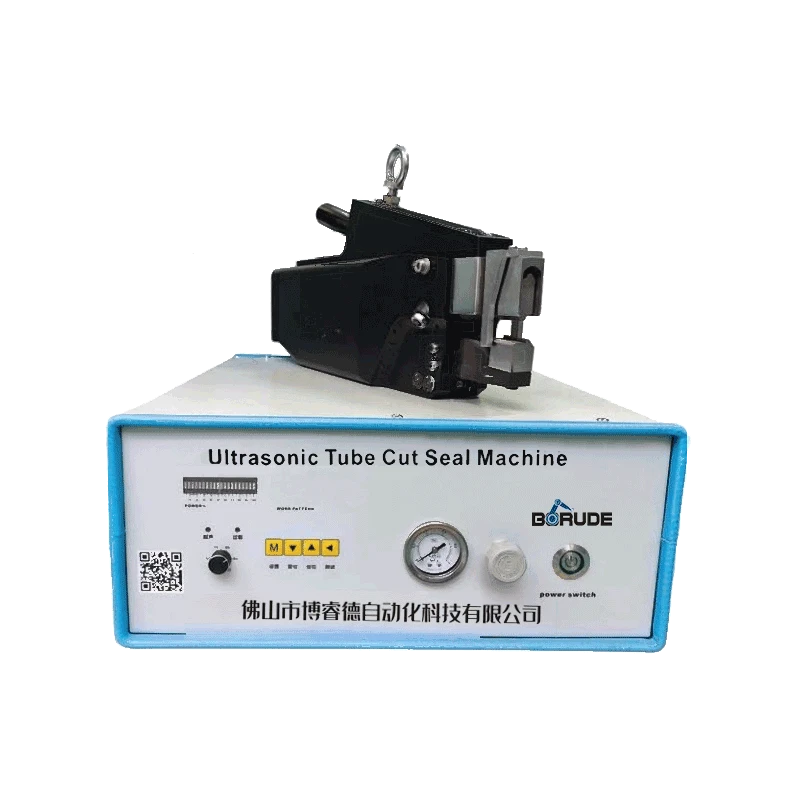
Sealing on R600a/R290 production lines: why is ultrasonic sealing the only option?
August. 10,2026
Policy ‘restrictions’ are tightening
From 2024, the Kigali Amendment will officially come into force in China, and high-GWP refrigerants (such as R134a and R410A) are being phased out at an accelerated pace. Although the alternatives, R290 (propane) and R600a (isobutane), are environmentally friendly, they are classified as A3-grade highly flammable refrigerants.
For production lines of this type, relevant national standards have explicitly stipulated that the use of open flames or high-temperature operations is strictly prohibited during sealing.
Why is flame welding not permitted?
Risk Factors: Flame Welding vs Ultrasonic Sealing
Open Flame ✅ Present ❌ Absent
Risk of Combustion or Explosion of Flammable Refrigerants 🔴 High 🟢 Zero
Hot Work Permit Required Not Required
Gas/Filler Consumption Continuous consumption Zero consumables
Dependence on welders: Certified welders required; general workers sufficient
Whether you are welding, quenching or annealing metal, or require smelting or through-heating forging, a single BORUDE high-frequency induction heating unit, combined with different induction coils and process parameters, can flexibly meet your needs. Below are the main processing areas it covers:
Major Application Categories | Specific Processes/Workpieces (corresponding to the keywords you provided) | Core Value
Welding: Security grille welding, steel pipe welding, condenser welding, welding of iron sheets/plates/pipes. Precise temperature control ensures full, oxidation-free welds without deformation of thin sheets
Quenching: Rack quenching, turning tool/steel cutter quenching, gear quenching, round shaft quenching, bore quenching. Enhanced surface hardness and wear resistance, with high precision in localised quenching
Annealing: Bar stock annealing, vessel annealing, steel/sheet metal/lead screw annealing. Reduces hardness, eliminates internal stresses and facilitates subsequent cold working
Melting: Iron melting, steel melting, copper melting, gold melting, aluminium melting, silver melting. Rapid melting with uniform composition, suitable for small-batch precision casting
Through-heating for forging: Bar through-heating, iron pillar through-heating, through-heating for forging – uniform heating throughout, consistent temperature from surface to core, and stable forging quality
Call-to-action at the bottom:
Which category does your workpiece fall into? Please feel free to send us a sample; we will conduct a free test run and provide a process proposal.
Format 2: Technical blog post (emphasising the ‘one machine, multiple uses’ value)
Title: One high-frequency machine = welding + quenching + annealing + melting + through-heating? Understand the principle and it all makes sense
When many customers see high-frequency induction heating equipment for the first time, they often ask: ‘What exactly can it do?’
Put simply, it can be used in almost any scenario requiring rapid heating of metal, whether locally or across the entire piece. The principle is not complicated—an alternating magnetic field is generated by an induction coil, causing the metal to heat itself. Therefore, by altering the coil configuration and adjusting the power and duration, entirely different process objectives can be achieved:
1. Welding (Brazing)
• Suitable workpieces: Copper tube condensers, steel pipes, iron sheets, security grille components
• Results: The filler metal melts to fill the weld joint; the base material is not overheated; the weld is smooth and clean
2. Quenching (surface hardening)
• Suitable workpieces: Gears and racks, turning tools, steel cutting tools, round shafts, internal bores of workpieces
• Results: Rapid heating to the phase transformation temperature followed by cooling results in a hardened, wear-resistant surface
3. Annealing (softening treatment)
• Suitable workpieces: bars, sheet metal, lead screws, steel vessels
• Effect: Heated to an appropriate temperature and then slowly cooled; reduces hardness to facilitate machining or cold bending
4. Melting (metal remelting)
• Suitable workpieces: metals such as iron, steel, copper, gold, aluminium and silver
• Effect: Rapid melting at high temperatures; suitable for precision casting or alloy formulation
5. Through-heating (whole-piece heating)
• Suitable workpieces: bars, iron columns and other workpieces requiring whole-piece hot working
• Effect: Ensures uniform temperature throughout the workpiece; used for preheating prior to forging, hot heading and hot rolling
For manufacturing plants, this flexibility means that a single piece of equipment can serve multiple production lines or different orders, significantly improving equipment utilisation and eliminating the need to purchase separate machines for each process


