


 Home
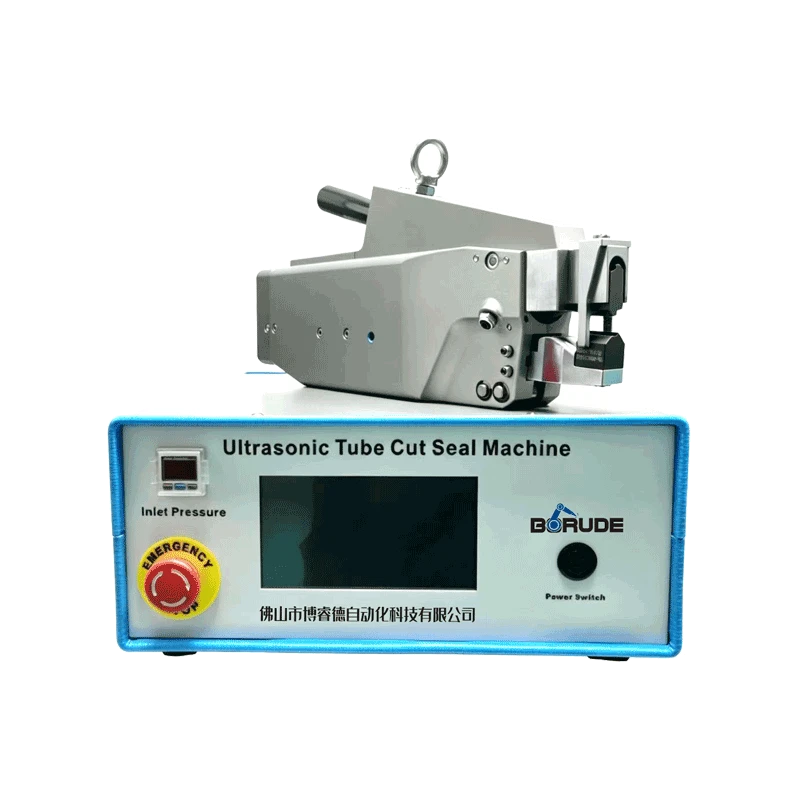
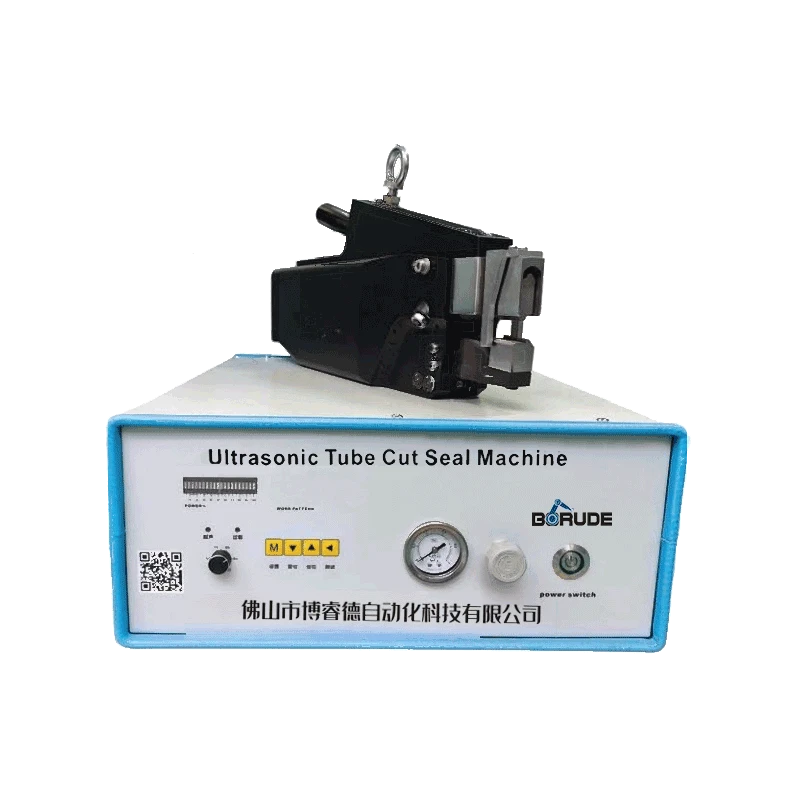
Ultrasonic Tube Sealing for Heat Pipes and Vapor Chambers | Borude
November. 09,2026
A heat pipe is not a component so much as a sealed pressure vessel with a wick inside it. Everything that makes it work — the vacuum, the working fluid, the capillary path — depends on one small operation at the very end of the line: closing the fill tube after the device has been evacuated and charged. Most plants still do this by crimping the tube and then soldering or brazing the crimp shut. It works, but it puts a flame within centimeters of a sintered wick, it drags flux into a device that will hold a few grams of ultra-pure water for a decade, and it depends on an operator's crimp pressure for a seal that must hold on every single unit. Ultrasonic tube sealing replaces that step with a solid-state bond formed in two to five seconds, with no flame, no filler metal and no flux.
1. Why the End Seal Decides Heat Pipe Reliability
Three failure modes in field returns trace back to the seal rather than to the wick or the charge. The first is loss of vacuum: a heat pipe evacuated to the 10-3 Pa range and filled with water at a few hundred pascals of vapor pressure cannot tolerate non-condensable gas. A joint with a micro-void or a partially wetted crimp leaks air slowly, the non-condensable gas accumulates at the condenser end, and thermal resistance climbs month by month until the device fails a burn-in test it passed at the factory. The second is wick damage: brazing the tube end means heating the assembly above 700°C, which anneals the copper, weakens the sinter-to-wall bond, and oxidizes the wick surface closest to the joint. The third is fluid contamination: flux residue, solder volatiles and organics left inside a sealed tube react with the working fluid, generate hydrogen, and raise the internal pressure so the evaporator runs hotter than the design point.
Soldered and crimped joints also move. A device cycled between -40°C and +125°C works its joint every cycle, and solder creeps under that load. The result is not a dramatic burst failure but a slow drift in thermal performance that appears in customer benches, not in your outgoing quality data.
2. What Ultrasound Does to a Charged Copper Tube
An ultrasonic sealer clamps the fill tube between a sonotrode and an anvil and drives the sonotrode at 20 kHz, parallel to the tube axis, under controlled force. The micro-scrub fractures and disperses the copper oxide at the interface and presses clean metal into intimate contact until the wall collapses onto itself and consolidates into a continuous solid-state bond. Nothing melts. The interface stays far below the annealing range of copper, which is the entire point: the wick a few millimeters away never sees a temperature that changes its sinter structure, and the working fluid never sees a flame that could drive off volatiles or oxidize the tube interior.
Because there is no filler and no flux, there is nothing to clean and nothing to outgas later. The same stroke that seals also cuts the tube, so the sealed tail is a consistent length instead of an operator-dependent stub. Cycle time including load, weld and cut runs two to five seconds depending on wall thickness — fast enough to sit inline behind the charging station rather than in a separate sealing cell.

3. Where the Seal Sits in the Heat Pipe Process
The sequence in a conventional heat pipe line runs: body and wick sintering, evacuation with a bake, working fluid charging by mass, seal, cut, helium leak test, thermal performance test, then flattening or bending if the part is a flat pipe. Position matters. The sealing step sits between charging and leak testing, which means it is the last operation performed on an open, fluid-bearing device and the first one whose quality the leak test actually measures. A process that introduces combustion products at that point contaminates everything downstream; a process that introduces nothing but mechanical work does not.
Most heat pipe fill tubes fall between 2 mm and 6 mm outside diameter with walls from 0.3 mm to 1.0 mm, and a single line may run three or four sizes across a product family. That argues for a machine with quick-change tooling and stored recipes rather than one dedicated head per tube size — the BRD-2A smart tube sealer handles the seal-and-cut stroke with parameter sets recalled by product code, and the BRD-2M tube sealing machine covers production volumes where changeover speed matters less than throughput.
4. Flat Heat Pipes and Vapor Chambers: The Geometry Problem
Vapor chambers and flat heat pipes push the seal into harder territory. The fill tube is often 1.5 mm to 3 mm outside diameter with a wall below 0.4 mm, and the tube is attached to a plate that is already thin, flat and dimensionally final. Crimping such a tube with a mechanical press collapses the wall unevenly and can pinch the bore shut before the joint is formed, leaving a void exactly where the leak path wants to be. Brazing it warps the plate: a 200°C to 700°C local excursion on a 1 mm copper plate shows up as flatness error in the next assembly step.
Ultrasonic sealing applies force over a small, defined footprint and delivers energy only where the weld forms, so the surrounding plate stays at ambient temperature and flatness is preserved without a straightening step. The tooling is built around your actual tube rather than a nominal size, and thin-wall tubes behave differently from thick-wall tubes at identical diameters.

5. Specification Checklist for Heat Pipe and Vapor Chamber Lines
Six questions separate a machine that will run in your line from one that will run in a demo room. First, diameter and wall range, demonstrated on your samples rather than quoted from a table. Second, whether seal and cut happen in one stroke, because a two-step process reintroduces the tail-length variation you were trying to remove. Third, closed-loop control of amplitude, force and energy per weld, with out-of-tolerance welds signaled instead of passed. Fourth, thermal evidence: a measured interface temperature and a microsection showing wick structure intact a few millimeters from the bond. Fifth, leak data — helium leak rate on sealed samples of your geometry, not a generic claim. Sixth, tooling economics: welds per horn regrind, regrind cost, and real changeover time between two tube sizes.
Ask also for written confirmation that the process is dry. A flux-free, flame-free seal removes the cleaning station, the fume extraction and the organic residue a fluid-filled device cannot tolerate.
Contact Borude for a Heat Pipe Sealing Trial
Send Borude your fill tube dimensions, wall thickness, tube material and working fluid, and we will seal and cut your own samples on a production machine, then return them with microsections, leak test data and cycle-time measurements for your qualification file. Our engineers also support refrigeration and HVAC tube sealing lines where the same platform closes compressor process tubes and capillary ends. Review the wider ultrasonic welding applications we build for, or send your drawings through the contact page to book a trial with our application team.


