


 Home
Ultrasonic Tube Sealing for Automotive Thermal Management Chillers | Borude
November. 11,2026
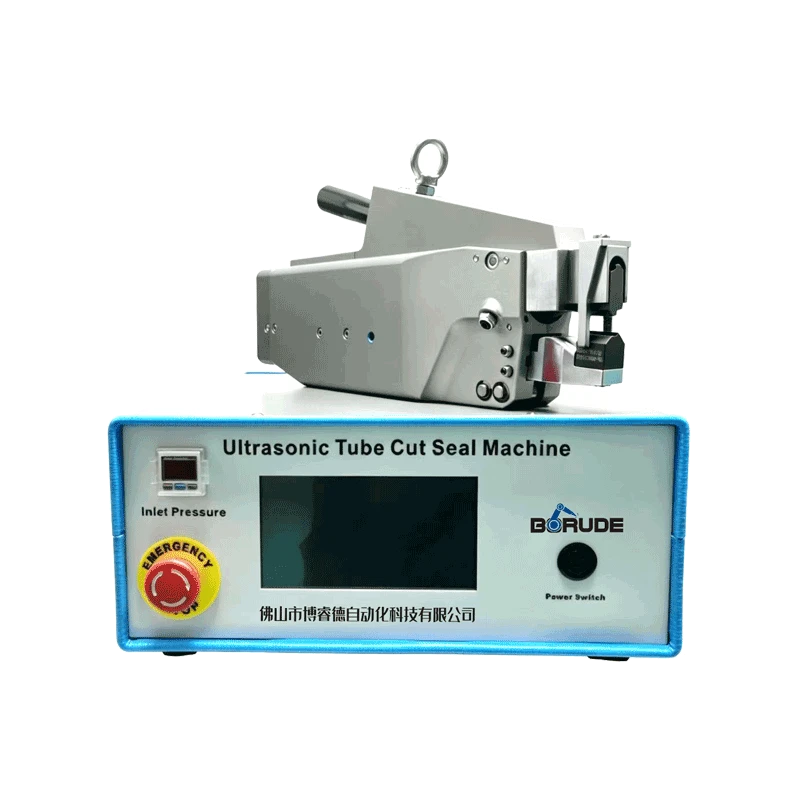
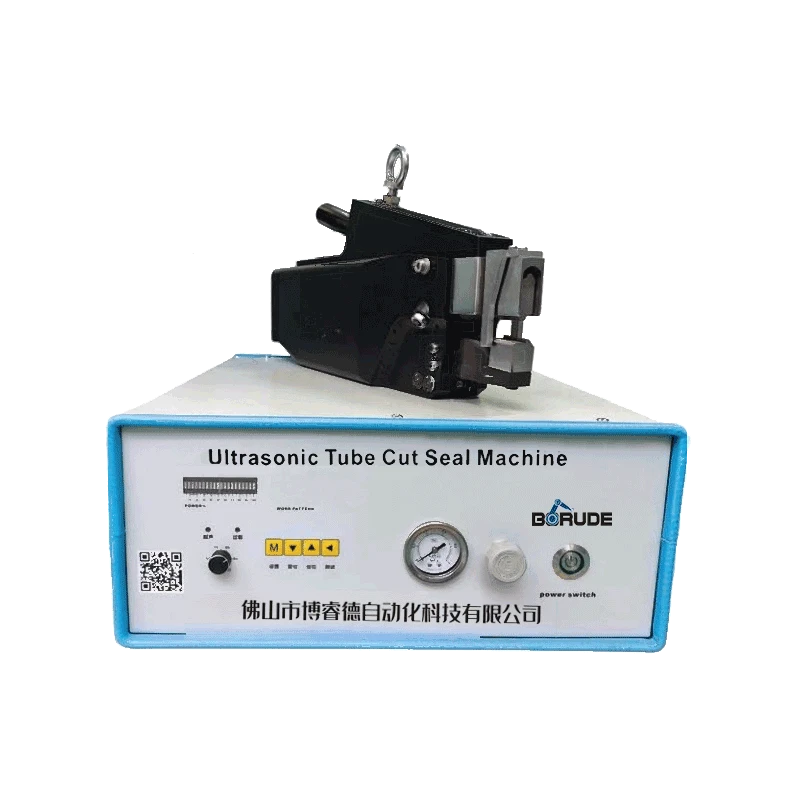
Every electric vehicle on the road today carries at least one chiller — a compact brazed-plate or shell-and-coil heat exchanger that couples the battery cooling loop to the refrigerant circuit, and often a second one for power electronics and cabin climate. Each of those chillers arrives at the end of its production line with one or more open copper or aluminum tubes: fill ports, charge tubes, sensor wells and process stubs that were left open for internal cleaning, pressure testing and refrigerant charging. Closing those tubes is the last operation before the unit is declared leak-tight, and it is where many production lines quietly accumulate their field failures. An ultrasonic tube sealer closes the tube by cold-welding the walls together in two to five seconds — no flame, no filler, no flux — which is exactly what an automotive-grade thermal component needs.
1. What a Chiller Line Has to Seal
A typical automotive thermal management plant runs several families of sealed tubes in high volume. On the refrigerant side, the chiller's suction and liquid-line stubs are closed after charging with R134a, R1234yf or, increasingly, the flammable refrigerants R290 and R600a that make any open-flame process a safety problem. On the coolant side, battery chiller plates and power-electronics cold plates leave a fill tube for glycol filling and vacuum degassing, then need it closed permanently. Brazed-plate chiller manufacturers also close purge and test ports that existed only for factory leak checking. Tube diameters across these applications cluster between 2 and 8 millimeters, mostly copper, sometimes aluminum, occasionally plated or copper-to-aluminum transitions — a range one sealing station can cover with quick-change tooling.
The common requirement is not just closure but hermetic closure under vibration and thermal cycling. A vehicle chiller sees -40°C cold starts, 120°C soak in the engine bay or battery pack, and thousands of pressure pulses over its lifetime. A closure that leaked one molecule of refrigerant per second in the lab becomes a warranty claim in year three.
2. Why Brazing Runs Out of Answers on an Automotive Line
Torch brazing the final closure has three structural problems in this industry. First, heat: a brazed-plate chiller is an assembly of alternating stainless steel plates and copper brazing layers, and re-heating the finished unit to brazing temperature puts every internal joint back under thermal stress after it has already passed leak testing. Gaskets, polymer sensor housings and electronic expansion valves near the tube entrance add further temperature ceilings that a torch cannot respect. Second, flux: brazing flux is corrosive, and residue trapped inside a narrow coolant passage or against an aluminum surface sets up galvanic corrosion and sludge that clogs microchannels months after the unit ships. Third, safety and auditability: sealing R290 or R600a charge tubes with an open flame inside a production hall demands explosion-rated zones, and a brazed joint's quality depends on operator technique in a way that automotive auditors increasingly refuse to accept.
A crimp-and-solder or crimp-only closure avoids the flame but not the leak path: a crimped joint relies on interference fit, and the crevice at the fold line is precisely where pitting corrosion starts on copper in humid climates. A copper tube sealing machine of the ultrasonic type removes the crevice altogether — the weld consolidates the tube walls into continuous metal.
3. How Ultrasonic Tube Sealing Forms the Closure
The process is mechanically simple and metallurgically strict. The open tube end is clamped between a profiled horn and a grooved anvil. The horn vibrates at 20 kHz with a few tens of microns of amplitude while moderate force presses the tube walls together. The vibration scrubs the oxide films off the facing surfaces, and the clean metals cold-weld under pressure — solid-state, without reaching melting temperature. The tube body, the chiller internals and any nearby seals stay within a few degrees of ambient throughout the two-to-five-second cycle. No filler metal is introduced, so there is nothing in the joint that can corrode preferentially or contaminate the refrigerant circuit.
Most automotive lines use a seal-and-cut machine: the same station welds the closure and shears the tail off behind it, leaving a finished, capped-looking tube end ready for the leak tester. Aluminum tubes seal just as readily as copper, and plated or oily surfaces — common on parts arriving from sub-suppliers — tolerate the process far better than they tolerate brazing, because the vibration displaces thin contamination instead of requiring chemical flux to dissolve it. The resulting joint routinely passes helium leak rates at the 10⁻⁶ mbar·L/s level and beyond, the standard threshold for automotive refrigerant circuits.

4. Fitting the Sealer into the Chiller Production Flow
The sealing station takes a fixed position in the line: after internal cleaning, after pressure and leak testing of the open unit, and after refrigerant or glycol charging — never before charging, because the charge tube is the charging port. On automated lines the tube is presented by robot or pick-and-place into a sealing fixture; on lower-volume lines an operator loads the tube into the same fixture manually. Either way, the machine seals and cuts in one cycle, and the unit proceeds directly to final helium leak test. For flammable refrigerant charging, the absence of any ignition source in the sealing cell removes an entire safety layer that a torch-based cell would need.
Data closes the loop. A production-grade sealer stores energy, force and displacement for every weld, compares each cycle against the recipe window and flags marginal closures before they reach the leak tester. When an auditor asks how a field unit's closure was made, the answer is a logged parameter set rather than an operator's memory. Plants integrating the sealer into their MES get per-unit traceability with no extra paperwork.

5. Selecting an Ultrasonic Tube Sealer for Automotive Production
Five checks separate a line-ready machine from a bench demo. First, tube range: the horn-anvil set must cover your full diameter and wall span — chiller lines routinely mix 3 mm sensor tubes with 8 mm charge tubes, and changeover time between them drives OEE. Second, seal-and-cut integration: confirm the shear is part of the welding cycle, not a manual second operation. Third, closed-loop control with per-weld data export to your traceability system; this is a gate, not an option, in automotive supply. Fourth, refrigerant compatibility evidence: ask for helium leak data and weld microsections on your tube alloy, plating and wall thickness — R290 and R600a lines should also get written confirmation that the process involves no ignition source. Fifth, tooling economics and support: welds per horn regrind, regrind turnaround and the supplier's application lab determine your cost per closure over the machine's life. A manufacturer such as Borude, which builds its own stacks and runs customer sample trials, qualifies the parameter window on your tubes before the machine ships.
6. The Same Discipline Across the Thermal Loop
Chillers sit inside a broader thermal system, and the closure question repeats wherever a tube enters a sealed circuit: compressor process tubes, filter driers, accumulators, battery cooling plates and liquid-cooled inverter manifolds all close their last open port the same way. Plants that qualify one ultrasonic tube sealing platform across these stations standardize fixtures, recipes and operator training, and the leak-test data becomes comparable across the whole plant. For suppliers serving both the refrigerant side and the coolant side of vehicle thermal management, that single-platform approach is usually the deciding argument — one process, one qualification file, one set of spare tooling. See more sealing use cases in refrigeration applications and automotive applications.

Contact Borude for a Chiller Tube Sealing Trial
Send Borude your tube drawings — diameters, wall thickness, alloy and plating — and our application engineers will seal your own tubes on production equipment and return them with microsections, helium leak data and the qualified parameter window for your line. Browse the full applications overview or the FAQ section for process details, then visit the contact page to arrange a trial or request a quotation for your chiller line.


