



 Home/Products/Handheld High Frequency Induction Heater
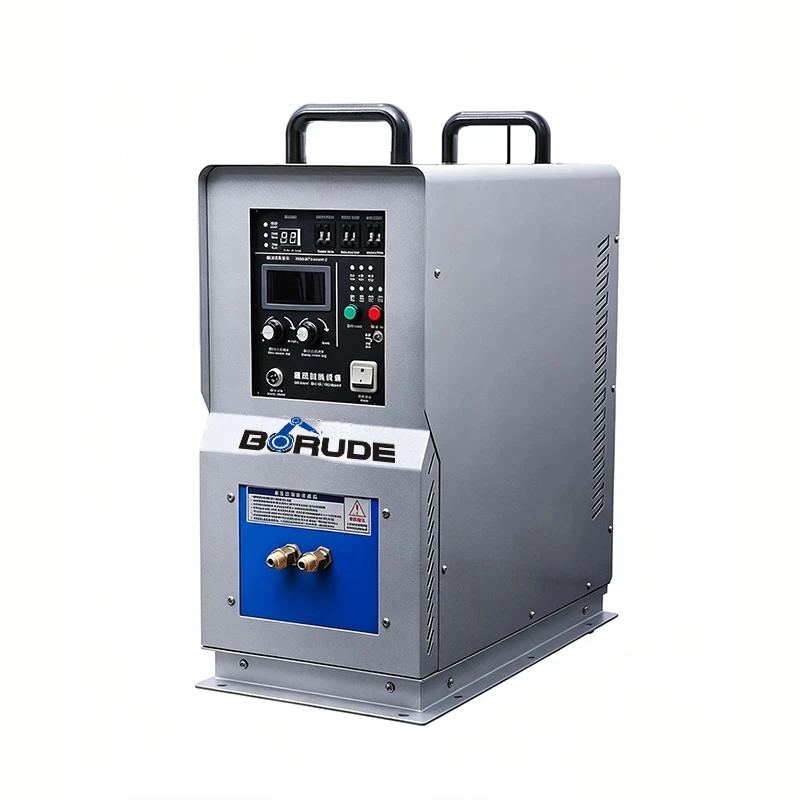
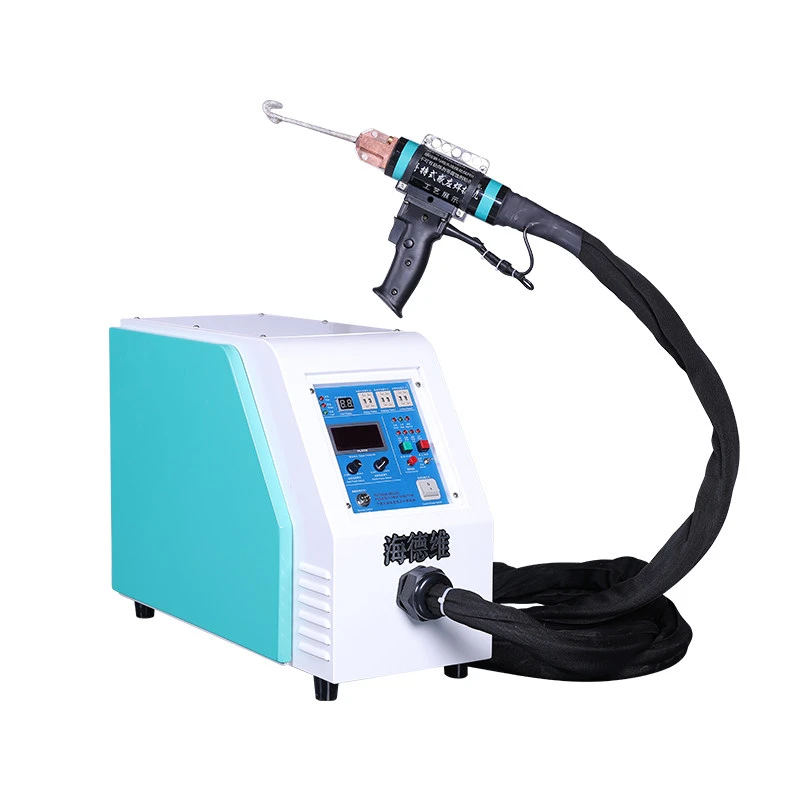
Handheld High Frequency Induction Heater
Model:BRD-38000-5A
Handheld high-frequency induction heaters adopt electromagnetic induction principle. An inverter converts mains AC into high-frequency current. The coil generates alternating magnetic field to produce surface eddy currents for fast heating and brazing.
Thanks to the skin effect, heat concentrates on metal surfaces with limited heat-affected zones. IGBT technology delivers over 90% efficiency, superior to vacuum tube devices.
Copper tube brazing takes 3–6s; joints reach 500–1200°C in 3–8s.
Thanks to the skin effect, heat concentrates on metal surfaces with limited heat-affected zones. IGBT technology delivers over 90% efficiency, superior to vacuum tube devices.
Copper tube brazing takes 3–6s; joints reach 500–1200°C in 3–8s.

Email: BORUDE@163.com

Share to:


Product Details
1. Applicable Fields
This device features portability, no open flame, fast heating, and simple operation, and is widely used in the following industries:
🧊 Industry
Air conditioner and refrigerator copper pipe brazing: Connect copper pipes to copper tubes, copper tubes to iron pipes, aluminum pipes, etc., welding time 3-6 seconds
Welding of condenser and compressor pipelines
Brazing processes for refrigeration valves, refrigerator and freezer piping, solar accessories, etc
Copper pipe welding for refrigeration equipment such as wine cabinets and water dispensers
⚡ The power industry
Brazing of power transformer joints
The end of the generator stator rod is welded to the silver-copper lead wire
🔩 Metal Processing & Heat Treatment
Quenching: rapid heating and hardening of gears, shafts, bearings, and tool surfaces
Annealing: Eliminates internal stress in metal and improves machinability
Welding: brazing of cemented carbide saw blades, diamond tools, turning tools, drilling tools, etc
🚗 Automobile manufacturing
The automotive evaporator is connected to the compressor
Motor short-circuit ring welding
🔬 Other Applications
Heated sleeve: The shaft sleeve after the motor rotor is heated
On-site maintenance: oil pipeline welding and continuous oil repairs
Mold heating, surface heat coating, weld preheating, etc
1.2 Equipment Code Reference Table
| Codename | Equipment name |
|---|---|
| 1 | High-frequency welding machines / handheld high-frequency induction heating machines |
| 2 | Ultrasonic copper tube sealing and cutting machine |
| 3 | Ultrasonic wave force battery welding equipment |
| 5 | Ultrasonic wire harness welding equipment |
| 7 | Ultrasonic terminal welding equipment |
1.3 Rules for Switching Between New and Old Models
HDW-15AC→BRD-38000-1-15ACDW-40AC→BRD-38000-1-40AC
2. Working Principle
The core principle of the handheld high-frequency induction heating machine is electromagnetic induction heating. The inverter converts 50/60Hz power frequency AC into high-frequency AC of several thousand to several hundred kHz, which is then introduced into the induction coil to generate an alternating magnetic field; Conductive metal workpieces are placed within a magnetic field, where eddy currents are induced on the surface, causing the metal itself to heat up rapidly and achieve heating and brazing.
Heating follows the skin effect: the higher the frequency, the more heat concentrates on the metal surface, resulting in higher heating efficiency and a smaller heat-affected zone. The entire device uses IGBT transistor technology, with a power conversion efficiency of >90%, significantly saving energy compared to older electron tube equipment (< efficiency 50%).
Typical performance: copper tube brazing for 3–6 seconds, solder joints heat to 500–1200°C in 3–8 seconds.
3. Applicable Fields
Equipment advantages: Portable, no open flame, rapid heating, easy operation.
Brazing copper pipes for air conditioning and refrigerators in the refrigeration and HVAC industry (copper-to-copper, copper-iron, copper-aluminum pipelines); Welding of condenser and compressor pipelines; Brazing of refrigeration valves, freezer pipeline fittings, and solar energy accessories; Welding of refrigeration pipelines for wine cabinets and drinking water machines.
Brazing of transformer joints in the power industry; The end of the generator stator bar is welded to silver-copper.
Metal processing and heat treatment hardening: hardening the surfaces of gears, shafts, bearings, and tools; Annealing: Eliminates internal stress in metals and improves machinability; Brazing: welding cemented carbide saw blades, diamond tools, turning tools, and drilling tools.
Automotive manufacturing: welding of evaporators and compressor pipelines; Motor short-circuit ring brazing.
Other applications include hot-sleeve assembly (motor rotor hot-fitting shaft); On-site maintenance of oil and gas pipelines; Mold heating, weld preheating, surface heat coating.
4. Detailed Explanation of IGBT Transistor Technology
IGBT stands for Insulated Gate Bipolar Transistor, and is the core power device of this device. Advantages of combining two types of power devices: MOSFETs: simple driving and fast switching speed; BJT: High voltage resistance, low conduction loss.
4.1 Workflow
IGBT high-speed alternating switching converts 50Hz mains frequency into 20kHz~80kHz high-frequency AC;
High-frequency current is delivered to the handheld induction coil, generating a high-frequency alternating magnetic field;
Metal workpieces induce eddy currents, which rapidly heat the surface layer through the skin effect to complete brazing and heat treatment.
4.2 Core Advantages of IGBT
High efficiency and energy saving: conversion efficiency exceeds 90%; Saves 70% energy compared to tube equipment and 15%~25% compared to thyristor equipment.
Precise and stable: Fast response speed, power and time control accuracy up to 0.1%, ensuring process consistency.
Compact and portable: Supports high-frequency operation, significantly reduces the size of magnetic components, and enables handheld split structures.
Safe and reliable: built-in multiple protections for overcurrent, overvoltage, and overheating; No open flames or exhaust gases, making the working environment safer.
4.3 Comparison of Traditional Thyristor Equipment VS IGBT Equipment
| Contrast dimensions | Traditional thyristor equipment | IGBT induction heating equipment |
|---|---|---|
| Operating frequency | < 10kHz, frequency band is limited | 60kHz–500kHz, with a wide range of applications |
| Control methods | Complex control and slow response | Voltage drive: simple operation, fast switching speed |
| Energy efficiency performance | High power loss | Low switching losses, energy savings of 15%~70% |
| Volumetric weight | The whole machine is heavy | Compact structure, enabling handheld portability |
| Control accuracy | Lower accuracy | It can reach 0.1%, with excellent process repeatability |
5. Technical parameters of the equipment
5.1 Reference parameters for mainstream models
| Parameter items | Small induction heating equipment | Handheld welding machine | Ultra-high frequency induction heating equipment | Portable handheld heater | High-power ultra-high frequency equipment | Handheld ultra-high frequency devices |
|---|---|---|---|---|---|---|
| Input voltage | Single-phase 220V | — | Single-phase 220V | Three-phase 380V | — | — |
| Power range | 15KVA oscillation power | 8–60kW | 6kW input power | 25kW | 60kW | 4kW |
| Oscillation frequency | 30–100kHz | 20–60kHz | 200–700kHz | 30–60kHz | 80–150kHz | — |
| Temporary load rate | 80% | — | 80% | — | 100% (24h continuous) | — |
| Cooling water requirements | 0.2MPa,≥5L/min | — | 0.2MPa,≥5L/min | — | Water-cooled main unit + air-cooled extension | — |
| Equipment weight | 20kg | — | Main unit 20kg, extension unit 2.5kg | 57kg | — | — |
| Lead length | — | 3–8m | — | — | — | 2m |
| Heating time | — | Copper tube brazing takes 3–6 seconds | — | 3–20s | — | — |
5.2 Power Selection Reference Table
| Power range | Applicable working conditions | Typical scene |
|---|---|---|
| 4–8kW | Small parts, on-site maintenance, precision local heating | Brazing and local preheating of micro workpieces |
| 8–25kW | Brazing copper pipes for air conditioners and refrigerators, as well as small and medium-sized workpieces | Refrigeration piping welding (completed in 3–6 seconds) |
| 30–100kW | Large workpieces and mass continuous production lines | Brazing of transformer copper bars and large-scale heat treatment |
Key points for selection: Power determines heating speed; Frequency determines heating depth; For copper tube brazing, the preferred high-frequency range is 30–100kHz.
5.3 Standard Configuration of the Entire Machine
Power Devices: IGBT/MOSFET all-solid-state solution, saving about 70% of electricity compared to traditional tube equipment
Control system: High-end models feature ARM STM32 full digital control, LCD display, and RS485 communication support
Protection functions: multiple protections for overvoltage, overcurrent, overheating, water shortage, and abnormal load
Structural features: Handheld cable 2–8 meters long, suitable for narrow space field operations
6. Advanced Model Selection Technical Guide
6.1 Frequency and Power Selection Logic
Core principle: power controls heating speed; Frequency control of heating depth and temperature difference between inside and outside.
Brazing (refrigeration copper tubes, small tools): 50–100kHz high frequency, rapid local heating
Surface quenching: the thinner the hardened layer, the higher the frequency of quenching; The 0.2–0.8mm hardened layer uses an ultra-high frequency of 100–250kHz
Thermal forging: The larger the workpiece diameter, the lower the frequency; For workpieces above Φ40mm, use medium frequencies of 0.5–10kHz
6.2 Process Selection Comparison Table
| Process types | Breaking down the operating conditions | Recommended frequency | Key points for power selection |
|---|---|---|---|
| Thermal forging | Workpiece Φ4–16mm | 50–100kHz | The larger the workpiece size, the higher the required power |
| Brazing | Refrigeration copper tubes, ≤ 20mm cutting tools | 50–100kHz | The higher the welding efficiency required, the greater the power |
| Heat treatment and quenching | Hardened layer: 1.0–1.5mm | 40–50kHz | Deep quenching requires reducing power and extending heating time |
| Small-scale melting | Precious metals, small furnaces | 1–8kHz midrange / ultra audio | Match power according to production capacity |
Note: Selection requires comprehensive consideration of workpiece material, size, and production efficiency. It is recommended to provide precise matching of process conditions.
6.3 Power Labeling Explanation
Induction heating equipment is divided into oscillation power and actual output power, with output power ≈ oscillation power ×60%. Our equipment uniformly displays the actual output power to prevent false speculation of parameters.
6.4 Explanation of Load Duration (Temporary Load Rate).
Load Duration (Load Utilization): The proportion of equipment heating time during standard operating cycles, with a general cycle of 5–10 minutes. For example: a 60% temporary load rate means that within a 10-minute cycle, it can operate continuously for up to 6 minutes, with the remaining 4 minutes for shutdown and cooldown.
Product Highlights: High-end IGBT models support 100% temporary load rate, can operate continuously at full load for 24 hours, suitable for large-scale automated production lines.
7. Maintenance Guide
Daily maintenance: Regularly clean dust inside the main unit, focusing on capacitors and power devices; Check the electrical wiring tightening; Monitor water temperature and current, and do not exceed rated parameters.
Regular maintenance (interval 1~1.5 years) to overhaul high-voltage transformers; Testing the insulation performance of high-voltage porcelain bottles and wiring; Clean air-cooled channels and water-cooled pipelines to prevent pipeline blockage and overheating that could cause inverter failure.
8. Comprehensive Introduction to High-Frequency Welding Machines
8.1 Working Principle
High-frequency welding machines operate based on the principle of electromagnetic induction. High-frequency current enters the induction coil to generate an alternating magnetic field, generating eddy currents inside the metal workpiece. Relying on the metal's own resistance, it rapidly heats up to achieve brazing operations. Compared to gas welding and arc welding: heat is generated inside the workpiece, heating up quickly, and the heating area is controllable.
8.2 Core Advantages
Wide range of applicable materials: supports welding of similar and dissimilar metals (copper-copper, copper-aluminum, copper-iron, aluminum-aluminum, etc.).
Fast heating speed: welding can be completed at a single point in just a few seconds, with production efficiency far exceeding traditional flame welding.
Adjustable heating depth: By adjusting the frequency, the depth of the heating layer can be flexibly controlled, balancing precision thin-walled and thick-walled workpieces.
High efficiency and energy saving: IGBT all-solid-state inverter, overall machine efficiency >90%; Supports 100% temporary load rate to meet the demand for continuous mass production.
Stable weld quality: Heat distribution is even, weld structure is dense, and mechanical strength and conductivity are excellent.
8.3 Industry Application Summary
| Industry | Typical craftsmanship |
|---|---|
| Cooling and HVAC | Air conditioner and refrigerator copper pipe brazing and condenser pipe welding (completed in 3–6 seconds per point) |
| Electronics and electrical appliances | Copper and aluminum terminal soldering, component lead brazing |
| Automobile manufacturing | Metal component welding and motor copper wire connection |
| Machining | Brazing of cemented carbide tools and welding of machine tool guide rails |
| The power industry | Brazing transformer copper busbars and generator stator joints |
9. Product Summary
The handheld high-frequency induction heating machine uses IGBT solid-state induction heating technology, offering advantages such as no open flame, rapid heating, precise temperature control, portability, and energy saving, fully replacing traditional flame welding equipment. Widely used in refrigeration and HVAC, electric power, automotive manufacturing, metal heat treatment, and other industries, supporting on-site maintenance, mass production, and automated production line support.
Why Choose Us?
-
 Compliance First, Future-OrientedThe global refrigeration industry is undergoing major transformation. Under the Kigali Amendment, high-GWP refrigerants are being replaced by flammable low-GWP alternatives including R290, R600a and R32. Traditional torch brazing is banned on related production lines. BORUDE ultrasonic copper tube sealing & cutting machines provide the only flameless, safe and compliant solution for refrigeration pipelines, helping manufacturers comply with regulations and build safer workshops.
 -
 Superior Performance Proven by DataOur test data demonstrates outstanding performance: the sealing withstands a burst pressure of 50MPa, 2–3 times the industry standard. Each seal takes only 0.5–1 second, 5–10 times faster than brazing. The leak rate is below 1×10⁻⁷ Pa·m³/s verified via helium mass spectrometry. The welding head lasts over 60,000 cycles, twice the industry average, with welding consistency reaching CPK≥1.33 for stable, repeatable results.
 -
 Low Total Cost of OwnershipCompared with flame brazing, BORUDE ultrasonic sealing technology requires zero consumables and consumes merely 1/30 of the energy used in resistance welding. It only needs general workers instead of certified welders and demands minimal maintenance. Sealed copper tubes stay bright without oxidation for high-value recycling, whereas parts from flame brazing suffer oxidation and low resale value. In most cases, cost savings within the first year can cover the equipment investment.
 -
 Smart Manufacturing ReadyThe Intelligent Model (BRD-38000-2A) supports seamless integration with Industry 4.0 production lines. Equipped with PLC control and a 7-inch touchscreen, it stores up to 20 recipes for one-click changeover and features an RS232 interface to connect external PLCs. The multilingual interface covers Chinese, English and Russian. It enables full-process quality monitoring of thickness, pressure and frequency, with automatic out-of-tolerance alarms to intercept defective products promptly.
 -
 Trusted & Validated by Over 200 CustomersTrusted by over 200 manufacturing enterprises, our equipment delivers stable and consistent performance under real production conditions. Our clients include well-known companies from refrigeration, new energy, automotive and other industries, and our machines have been exported to Mexico, Russia, Vietnam, Tunisia and more countries.
Product Consultation
Related Applications


