


 Home
Home
Energy-Efficient Ultrasonic Welding for Sustainable Tube Sealing | Borude
September. 28,2026
Sustainability has moved from the marketing brochure to the purchase order. Plant managers upgrading a refrigeration or HVAC line are now asked not only about cycle time and machine price, but about energy per weld, consumable waste, and whether the process can pass a customer's carbon audit. For procurement teams comparing a copper tube sealing machine against traditional brazing or resistance welding equipment, the numbers favor ultrasonic technology by a wide margin. This guide explains where conventional methods lose energy, how an ultrasonic metal welder converts electricity directly into a solid-state joint, and which data points your new welding cell can contribute to an ESG report.
Where Conventional Sealing and Joining Methods Waste Energy
Flame brazing heats far more than the joint. A torch raises the temperature of the entire tube end, the surrounding copper or steel, and often the air in the workshop, while gas cylinders must be purchased, stored, and replaced. The process also demands certified welders, hot-work permits, and continuous fume extraction. Every kilowatt that goes into heating metal that did not need to be heated is pure waste, and the heat-affected zone it creates can distort thin-wall tubes and require rework.
Resistance welding wastes energy in a different way. It drives very high current through the whole workpiece to generate heat at the interface, which means the machine's power draw is inherently large, electrodes must be dressed and replaced regularly, and many installations need water-cooling loops that consume additional energy. Flux-based soldering adds another layer: chemical consumables, fume management, and post-process washing of flux residues. When a buyer totals the energy bill, the consumables, and the compliance overhead of these methods, the true cost per joint is several times the price quoted on the equipment brochure.
How Ultrasonic Solid-State Welding Converts Energy Directly Into the Joint
An ultrasonic welder works mechanically instead of thermally. The system converts 50 Hz mains power into 20–40 kHz high-frequency vibration, and the welding head applies that vibration under controlled pressure directly at the metal interface. Friction at the interface disperses the oxide film and produces a solid-state bond at temperatures far below melting — for tube sealing, the interface stays below about 150 °C, so the tube body never glows, never oxidizes, and never distorts.
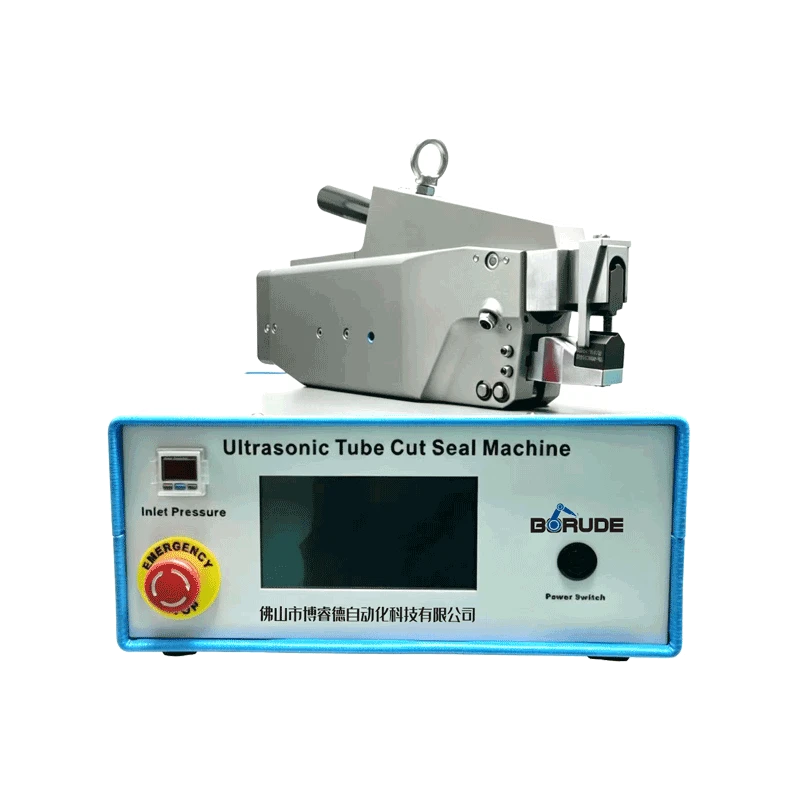
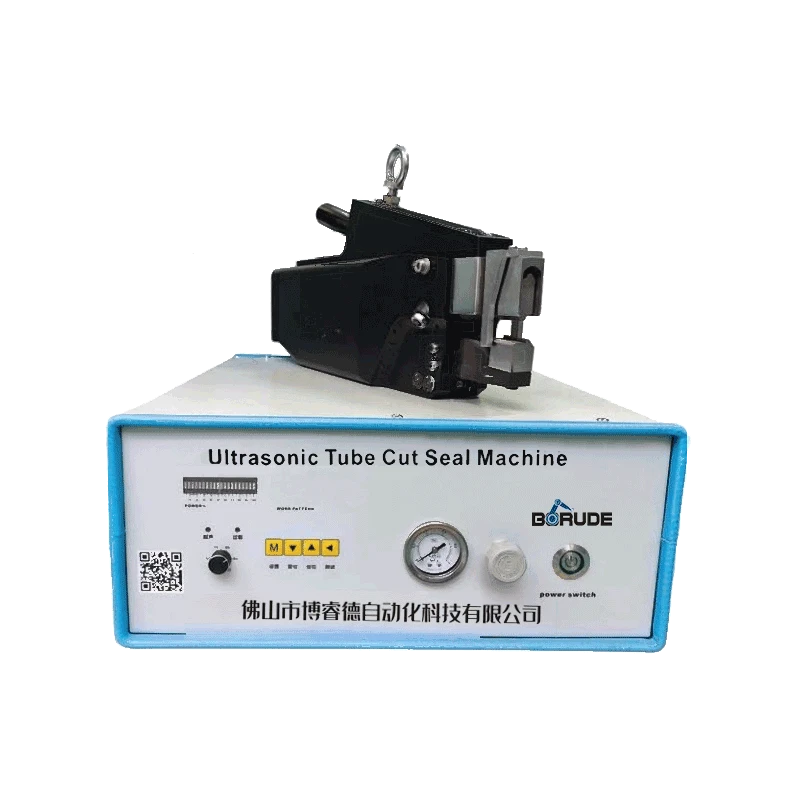
Because the energy is deposited only where the bond forms, efficiency is dramatically higher. The Borude BRD-2A smart ultrasonic tube sealer publishes a power demand of approximately 1/30 of resistance welding, runs on ordinary 220 V AC / 50 Hz single-phase supply with an air pressure of 0.45–0.6 kgf/cm², and completes one sealing cycle in about 1 second — 5–10 times faster than brazing. There is no water-cooling circuit, no gas storage area, and no need for a dedicated high-voltage feed, which also reduces the embodied energy of the installation itself.

Borude BRD-2A Smart ultrasonic tube sealer: 220 V single-phase supply, about 1/30 the power demand of resistance welding.
Beyond kWh: Zero Consumables, Cleaner Air, Recyclable Joints
Energy is only one column of a sustainability assessment. Ultrasonic welding eliminates the consumables that brazing and soldering consume by design: no filler rings or rods, no flux, no shielding or fuel gas, and no abrasive electrode dressing. Fewer purchased inputs mean less mining, transport, and packaging embedded in every joint, and nothing arrives at your gate that will later leave as hazardous waste.
The joint itself stays clean. Because the tube end is never heated to oxidation, the cut-off tail of a sealed capillary tube retains its original surface and can be recycled at pure copper prices, turning what brazing turns into contaminated scrap into a recoverable material stream. The workshop environment improves as well: no open flame removes the need for hot-work permits and fire watch, no flux means no fumes and no washing stations, and the process runs quietly enough for standard production floors.
For manufacturers of refrigeration appliances and heat pumps, there is a third benefit that compounds the first two. Removing every ignition source from the sealing station is the most direct way to support safe handling of A3 refrigerants such as R290 and R600a under EN 378 and ASHRAE 15 risk assessments — a regulatory trend documented in Borude's refrigeration applications guide. A flameless line is easier to insure, easier to audit, and easier to scale as low-GWP refrigerant rules tighten worldwide.

Flameless copper tube sealing for R290/R600a refrigeration lines removes ignition sources and hot-work permits from the workshop.
Turning Weld Data Into ESG Report Content
Sustainability claims only count when they can be measured. A modern ultrasonic welding cell generates the data trail that energy managers and auditors need. The BRD-2A Smart monitors sealing wall thickness, air pressure, and frequency shift on every cycle and raises an alarm when a weld drifts out of the process window, which directly reduces scrap — and scrap reduction is material savings that show up in both cost and carbon accounting.
Through its RS232 data output and PLC integration, each weld's parameters and timestamps can be exported to a line database, giving your team verifiable figures for energy per weld, first-pass yield, and alarm rates. Tooling contributes too: the welding head on Borude tube sealers lasts more than 60,000 cycles — about twice the industry average — and tips serve roughly 6,000 welds per point, so the machine consumes far less metal over its life than electrode-based processes. For customers preparing CSRD-style disclosures or ISO 50001 energy reviews, an ultrasonic terminal welder with process monitoring turns the welding station from an anonymous power line into a documented, reportable data source.

Production-grade ultrasonic welding with per-cycle monitoring: the data backbone for energy and yield reporting.
Buyer's Checklist: Evaluating Truly Energy-Efficient Welding Equipment
Suppliers increasingly label their machines "green", so buyers should verify rather than assume. Before signing a purchase order for an ultrasonic tube sealer or any related energy-efficient welding equipment, work through six checkpoints:
1. Published energy-per-weld specification
Ask for a number, not an adjective. Borude states approximately 1/30 the power demand of resistance welding for its tube sealing systems — a figure a facility engineer can multiply by daily volume to estimate annual savings.
2. Installation footprint and utilities
Confirm the supply requirement: 220 V AC single-phase, 0.45–0.6 kgf/cm² compressed air, no water cooling, no gas storage, no hot-work zone. Less infrastructure means less embodied energy and faster commissioning.
3. Process monitoring and alarms
Every-weld monitoring of wall thickness, pressure, and frequency with automatic alarms prevents silent scrap generation — the least visible form of energy waste.
4. Data export capability
RS232 or PLC-level output should let you log parameters per weld for energy audits, customer assessments, and yield trend analysis.
5. Tooling life and consumables list
Request the rated cycles for the welding head and tips — Borude's head exceeds 60,000 cycles — and the complete list of wearing parts. A short list is the sign of a genuinely low-waste process.
6. Certification and operator requirements
Ask for CE documentation where applicable, and confirm the machine runs with general operators rather than certified welders — skills scarcity is itself a sustainability risk for long-term production.
Why Manufacturers Choose Borude for Sustainable Welding Lines
Borude (Foshan Boruide Automation Technology) is a Chinese manufacturer focused exclusively on ultrasonic metal welding and sealing. Its product line covers the tube sealers BRD-2A Smart and BRD-2M Basic for refrigerant and capillary tube sealing, the BRD-7A terminal welder for high-voltage connections, and wire splice welders for harness production — all built around the same solid-state, flameless, low-energy principle. Reference clients include well-known companies from the refrigeration and new energy sectors, and the company publishes the energy and tooling-life figures on its product pages so buyers can build their own cost and sustainability models before committing.
Every machine described above ships with process monitoring, parameter storage, and the documentation needed to integrate weld data into factory systems, supported by a team that helps buyers run sample welds on their actual tubes and terminals before purchase.
Ready to Cut the Energy Bill of Your Sealing Line?
Contact Borude for energy comparison data, sample welds on your tubes, and a quotation for an energy-efficient ultrasonic tube sealer or metal welder.
Get in Touch with Borude© 2026 Borude Ultrasonic Metal Welding. All rights reserved.


