


 Home
Home
Ultrasonic Welding MES Integration and Weld Data Traceability | Borude
September. 24,2026
Published by Borude | September 24, 2026 | Ultrasonic Welding Applications
Auditors and OEM customers are asking a harder question than they used to. It is no longer "is the joint good?" — it is "show me the weld record for this serial number." Whether you seal copper tubes on refrigeration lines, weld terminals into EV battery packs, or splice automotive harness wires, the expectation is moving from inspected quality to documented quality. The good news for buyers of ultrasonic metal welding equipment is that the ultrasonic process is inherently digital: every weld already generates the numbers that prove it. This guide explains what data an ultrasonic welder produces, how it flows from machine to MES, and what to demand when sourcing welding equipment for a connected, Industry 4.0-ready line.

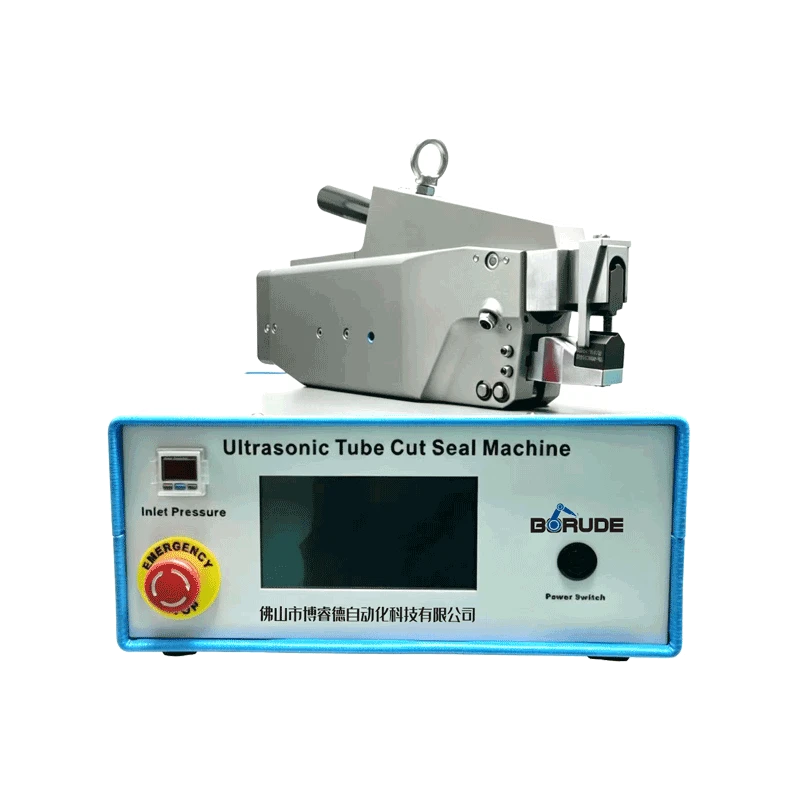
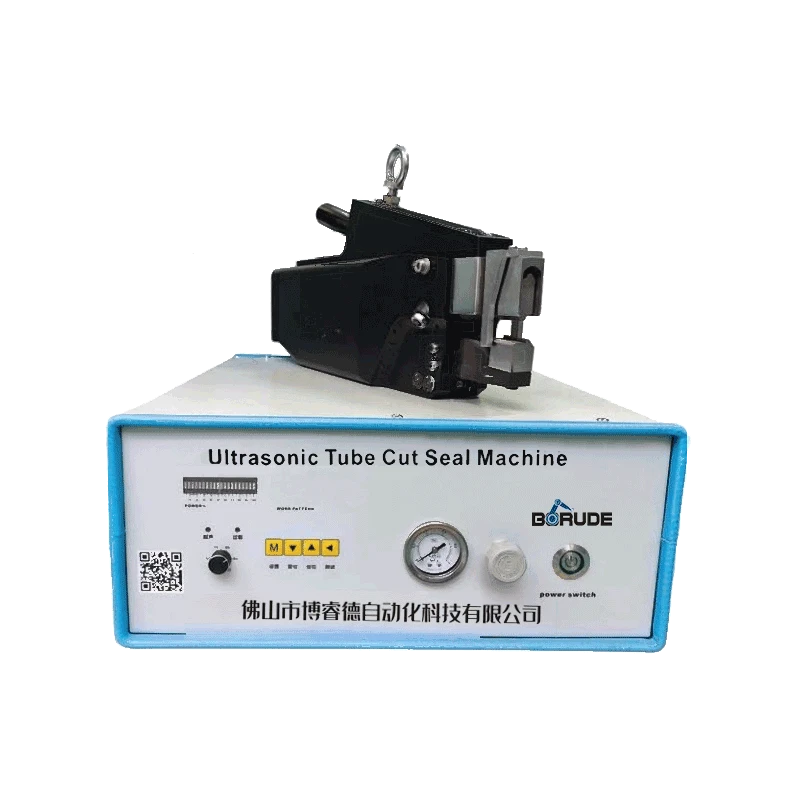
Smart-class ultrasonic tube sealer with built-in process monitoring and data output
Why Weld Data Traceability Is Becoming Non-Negotiable
Three pressures are converging on manufacturers who weld metal joints:
- Quality-system audits. Automotive suppliers working under IATF 16949 are expected to demonstrate process capability and per-part records for safety-relevant joints. ISO 9001 customers increasingly ask for the same evidence during second-party audits.
- Regulatory and customer traceability. EV battery regulations and OEM battery-passport initiatives push toward unit-level production records, and welded interconnects — tabs, busbars, terminals — sit squarely inside that scope.
- Containment economics. When a field issue appears, the difference between scrapping three weeks of production and quarantining a bounded list of serial numbers is whether you can retrieve per-weld data. Traceability is not paperwork; it is the cheapest insurance a welding line can buy.
A resistance or soldering process makes this hard because its outcome is judged afterwards by destructive checks. An ultrasonic weld is different: the machine measures the physics of bond formation while it happens, weld after weld, at line speed.
What Data an Ultrasonic Welder Can Actually Capture
Because ultrasonic bonding is a closed mechanical process, every weld is self-documenting. A connected machine can record, for each individual weld:
- Energy delivered (joules) — the primary indicator of bond formation; abnormal values flag slippage, contamination, or oxide films.
- Amplitude and weld time — the commanded process window, confirming the correct recipe ran for that part.
- Clamping force / air pressure — coupling quality; drift here is a classic root cause of cold joints.
- Frequency shift — an early-warning signature of tooling wear or poor coupling long before joints fail.
- Collapse or sealed thickness — on tube sealing, the measured wall thickness after welding verifies the seal without cutting a sample.
- Timestamp, recipe/parameter-set ID, and alarm status — the fields that tie a weld to a serial number in an MES.
That last pair is what turns machine data into traceability. Borude Smart-class controllers, for example, monitor weld thickness, pressure, and frequency in real time, raise an automatic alarm when a weld drifts outside its window, and store up to 20 parameter groups — so recipe identity and weld evidence travel together instead of living in separate systems.
Four Integration Paths: From Standalone Machine to MES
"Integration" is not a single product but a ladder. Each rung delivers value on its own, and most factories climb it one step at a time:
Level 1 — In-machine control and alarms. The welder stores validated recipes, monitors each weld in real time, and signals reject via digital I/O to a marker or reject chute on the line. This alone blocks bad joints from moving downstream.
Level 2 — RS232 data logging. The controller streams per-weld records to a line PC or data logger. This is the fastest route to weld data traceability — the smart ultrasonic tube sealer class of machines already carries an RS232 port for exactly this purpose.
Level 3 — PLC and SCADA aggregation. Weld records merge with line events (barcode scans, station signals) in the PLC layer and appear on SCADA dashboards. SPC charts per shift, per tooling set, and per recipe become practical, and energy-trend analysis exposes tip wear before it produces scrap.
Level 4 — MES/ERP record per serial number. A gateway converts machine data into standard plant protocols such as OPC UA or MQTT, and the MES stores one retrievable weld record per part. A mock audit — "pull the weld data for serial X" — then takes minutes, not days.

Real-time monitoring in an ultrasonic welding production cell
Buying Criteria for a Truly "Connected" Ultrasonic Welder
Sales brochures for every welding machine now say "smart." Use these six criteria to separate genuine Industry 4.0 capability from marketing:
Per-weld data export, not summaries. Ask to see the raw output: one record per weld with energy, amplitude, force, time, frequency shift, and alarm status. A daily summary report cannot support traceability or SPC.
Parameter lock with access levels. Operators should run recipes; only engineering should change them. Multiple stored parameter groups with permission control prevent both unauthorized tweaks and cross-product mistakes during changeovers.
Alarm and reject signaling. The machine must raise a hardware signal (digital I/O) the moment a weld falls outside its window, so the line can mark or divert that part automatically.
Time and identity anchoring. Confirm how records synchronize with line time and how a serial number or barcode scan attaches to the weld record. Without this link, data is just numbers.
Open, documented interfaces. RS232 is a solid baseline; ask for the protocol documentation and whether Ethernet or gateway-based options (OPC UA/MQTT) are supported for MES integration. Closed protocols are integration projects in disguise.
Supplier support during integration. A serious vendor provides sample data files, helps your PLC/IT team parse the output, and welds your actual parts to build validated alarm windows — before delivery.
A Six-Step Rollout Roadmap for Weld Traceability
Step 1 — Baseline first. Log a week of production data from the welder and chart energy and frequency trends per shift. You cannot set meaningful alarm windows until you know what normal looks like.
Step 2 — Define the record schema. Agree with quality and IT which fields each weld record carries and how serial numbers map to stations. Thirty minutes of design here saves months of rework.
Step 3 — Pilot one station. Connect a single welder's RS232 output to a logger and run it in parallel with existing practice. Validate that operators can work with it, not around it.
Step 4 — Validate alarm windows deliberately. Produce intentionally defective welds on scrap material and confirm the monitor catches every one. Alarm limits tuned on assumptions are audit liabilities.
Step 5 — Scale and integrate reject handling. Extend data logging to all welding stations and wire alarm outputs into markers or diverters so a flagged joint physically cannot continue downstream.
Step 6 — Run a mock audit. Pick a random serial number and retrieve its complete weld record in under five minutes. If the exercise passes, real audits will too.

Ultrasonic busbar welding — a core traceability application in battery manufacturing
Why Borude for Connected Ultrasonic Welding Lines
Borude (Foshan Boruide Automation Technology Co., Ltd.) builds ultrasonic metal welding equipment for the refrigeration, HVAC, battery, automotive, and solar industries, and our customers choose us for connected lines for three reasons:
Monitoring is built in, not bolted on. Our Smart-class controllers measure weld thickness, pressure, and frequency in real time, alarm on drift, store 20 parameter groups, and output data over RS232 — the foundations of weld data traceability are standard equipment on machines like our ultrasonic terminal welder and smart tube sealers.
One platform across the line. Tube sealers, terminal welders, and wire splicers share the same control architecture, so your record schema, alarm logic, and operator training carry over between stations and product families — across every ultrasonic welding application on your floor.
Engineering support through integration. We weld your samples and help define validated alarm windows before purchase, and our team assists your PLC and IT engineers with data output formats so the path from machine to MES stays short.
Planning a Connected, Traceable Welding Line?
Tell us which joints you weld — copper tube sealing, terminals, busbars, or wire splices — and we will recommend a machine configuration with the monitoring and data-output level your quality system requires, including a free sample-welding trial.
Contact Borude for a Traceability ConsultationOr email us at info@borude-sonic.com | Typical response within 24 hours
Related reading: BRD-2A Smart Ultrasonic Tube Sealer | BRD-7A Ultrasonic Terminal Welder | Ultrasonic Welding Applications | Borude Ultrasonic Welding Equipment


