


 Home
Home
CE/UL Certification and Compliance Workflow for Ultrasonic Welding Equipment | Borude
September. 25,2026
When procurement teams source a copper tube sealing machine or ultrasonic metal welder from overseas, the first question after price and delivery is often: "Does it carry CE or UL certification?" Without the right marks, the machine may be blocked at customs, rejected by your EHS team, or excluded from insured production lines. This guide walks through the compliance workflow Borude follows for its ultrasonic welding and sealing equipment, and what buyers should verify before signing a purchase order.

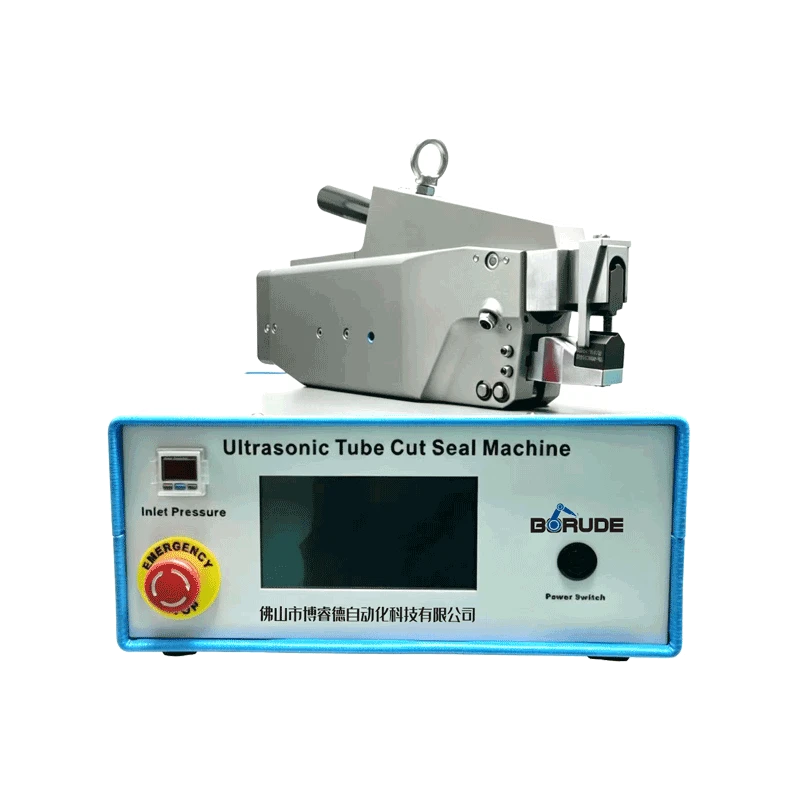
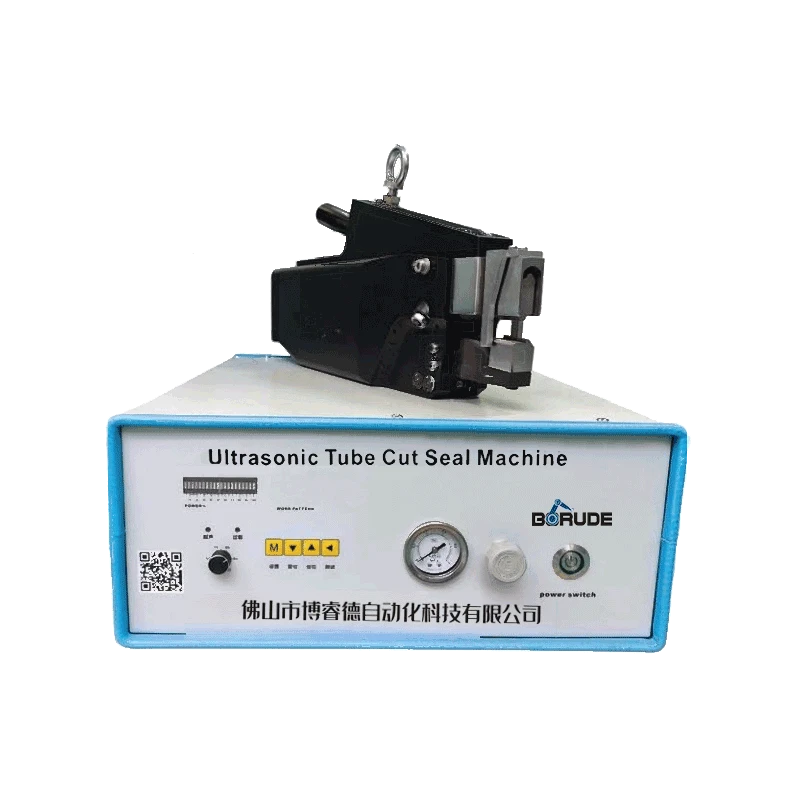
Borude BRD-2A Smart ultrasonic tube sealer designed for R290/R600a refrigeration lines.
Why CE and UL Marks Matter for Ultrasonic Welders
CE marking is the passport for placing industrial machinery on the European Economic Area market. For an ultrasonic metal welder, the most relevant regulations are the Machinery Directive 2006/42/EC, the EMC Directive 2014/30/EU, and the Low Voltage Directive 2014/35/EU. Each addresses a different risk: mechanical guarding and emergency stops, electromagnetic compatibility with nearby PLCs and drives, and electrical safety of the generator, actuator, and control cabinet.
In North America, UL or cUL listing is the benchmark. While CE is largely self-certified by the manufacturer with third-party testing for certain hazards, UL typically requires a recognized lab to evaluate the equipment against standards such as UL 508A for industrial control panels and NFPA 79 for electrical safety in industrial machinery. Buyers who need equipment installed in facilities governed by insurance or municipal inspectors should request UL listing, not just a CE certificate.
The stakes rise further when the machine is used on production lines handling flammable refrigerants. A flameless ultrasonic tube sealer for R290 or R600a lines not only removes the ignition source but also makes it easier to document compliance with EN 378 and ASHRAE 15 risk assessments.
The CE Compliance Workflow from Design to Delivery
A rigorous CE workflow starts at the design stage, not the shipping department. The manufacturer must first identify every applicable directive and harmonized standard. For ultrasonic welding equipment these typically include EN ISO 12100 for risk assessment, EN 60204-1 for electrical safety, EN 61000-6-2 and EN 61000-6-4 for EMC, and EN ISO 13849-1 for safety-related control systems.
Typical CE technical file contents:
- General description of the machine and intended use
- Risk assessment per EN ISO 12100
- Drawings, electrical schematics, and hydraulic/pneumatic diagrams
- Test reports for EMC, electrical safety, and noise emissions
- User manual with safe operation, maintenance, and residual risks
- Declaration of Conformity (DoC) signed by the manufacturer
After the design is frozen and prototypes are built, the machine undergoes internal and third-party testing. Once all non-conformities are closed, the manufacturer draws up the EU Declaration of Conformity and affixes the CE mark. The entire technical file must be kept available for at least ten years after the last unit is placed on the market. When a buyer asks for the DoC, the supplier should be able to send it within one business day. Any hesitation is a red flag.

Production-grade ultrasonic terminal welder with PLC control and process monitoring.
North American UL Listing: What Buyers Should Verify
For the United States and Canada, the path is different. A manufacturer cannot simply self-declare UL compliance. The equipment must be evaluated by an OSHA-recognized NRTL such as UL, CSA, or Intertek. The evaluation covers enclosure ratings, component approvals, wire sizing, grounding, emergency stop circuits, and proper use of listed contactors, breakers, and motor drives.
If the machine is supplied without a UL listed control panel, the end user may have to pay for a field evaluation, which can cost several thousand dollars and delay line startup by weeks. When sourcing a wire splice welder or tube sealer from China, ask whether the supplier has already completed a UL listing or field evaluation for a reference machine. Even if the exact model is not yet listed, a supplier with prior UL experience will deliver drawings and component data sheets that speed up the process.
Compliance Checklist Before You Place the Order
Use the following checklist to protect your project timeline and budget. It applies whether you are buying a single benchtop welder or a multi-station production line.
- Request the Declaration of Conformity for CE-marked machines. Confirm it lists the directives and standards, the machine model, and a responsible signatory.
- Ask for test report summaries, especially EMC and electrical safety. Full reports may be confidential, but a summary with test lab name and pass/fail results should be shareable.
- Verify electrical ratings match your plant. A 220V/50Hz machine will not run correctly on 208V/60Hz without a transformer and frequency converter.
- Check the user manual language. OSHA and EU inspectors expect a manual in the local language of the operator.
- Confirm spare components are standard. Non-listed custom relays or safety relays can void compliance.
- Ask about field support. Does the supplier provide installation, training, and a commissioning checklist signed by your EHS team?

Borude wire splice welder used in automotive and battery harness production.
How Borude Approaches Global Compliance
Borude designs its ultrasonic welding equipment with export markets in mind from the first engineering review. Based in Guangzhou, the company has shipped machines to Mexico, Russia, Vietnam, Tunisia and other regions. That experience means electrical schematics, component lists, and manuals are prepared in a format that European and North American auditors can review without rework.
The company culture is quality-oriented and technology-driven. Every machine is built around a PLC control platform with documented I/O, RS232 communication, and standardized safety circuits. This architecture simplifies EMC testing and makes it easier to add UL-listed components when a customer requires North American approval.
For R290/R600a refrigeration applications, Borude's flameless process removes the open flame hazard entirely. Combined with documented risk assessments and operator training, this helps customers satisfy both machinery safety directives and flammable-refrigerant site rules.
Red Flags When Sourcing Certified Equipment from China
Not every certificate is equal. Be cautious if a supplier offers a generic CE certificate that does not name the specific machine model, or if the certificate comes from an unknown body with no accreditation listed. A valid DoC is issued by the manufacturer, not by a third-party "certification company" that only sells paper.
Also watch for voltage and frequency mismatches. Many Chinese factories default to 220V/50Hz. If your plant runs 480V/60Hz, the machine needs a transformer and possibly a motor-drive redesign. A compliance-focused supplier will ask about your site power before quoting, not after the machine arrives.
Need CE/UL-Ready Ultrasonic Welding or Tube Sealing Equipment?
Tell Borude your target market and site requirements. Our engineering team will confirm the compliance scope, electrical configuration, and documentation package before production begins.
Contact Borude for a Compliance ReviewAbout Borude: Borude is a high-tech enterprise specializing in the research, development, and manufacturing of ultrasonic metal welding equipment. The company delivers flameless, safe, and compliant welding solutions to manufacturers worldwide, with applications in refrigeration, automotive, battery, solar, and electronics industries.


