


 Home
Ultrasonic Ribbon Welding for Solar PV Junction Box Terminations - Borude
November. 06,2026
Most module-level joining discussions stop at tabbing and stringing, yet the last weld on a module is the one that carries every ampere out of it: the termination where PV ribbon meets the solar junction box terminal. This connection is made after lamination, on a box-attachment station, where the encapsulant is already in place, the backsheet is exposed and the bypass diodes are waiting inside a polymer housing. Soldering it is possible, but increasingly awkward: lead-free alloys push tip temperatures above 300°C within millimeters of an EVA edge, flux vapors condense inside the box, and a single cold joint survives EL testing and fails in the field year three. That is why more module and junction box manufacturers are moving this termination to ultrasonic ribbon welding — a solid-state process that joins tinned copper ribbon to copper or brass terminals in about two seconds, without solder, flux or filler.
1. Why the Junction Box Termination Is the Hardest Joint on the Module
A ribbon termination inside a junction box carries three conflicting requirements. Electrically, it must add as little series resistance as possible, because the full string current of the module funnels through it for twenty-five years. Thermally, it must be made without cooking the surroundings: the housing is usually PPO or PA filled polymer with a heat deflection temperature far below a soldering-iron tip, the laminate edge is a few millimeters away, and the sealant bead that gives the box its IP rating cures at modest temperatures. Mechanically, the joint must survive thermal cycling between roughly -40°C and +85°C, where the coefficient of thermal expansion mismatch between copper ribbon and polymer housing works the interface every single day.
Soldering answers the electrical requirement and then attacks the other two. A hand-soldered or solder-pot termination depends on operator technique and wetting quality, leaves a flux residue that is impractical to clean inside a sealed box, and introduces a solder layer whose creep behavior under thermal cycling is a known failure initiator. The same flux chemistry has also been implicated in potential-induced degradation paths at the box interface. None of these problems shows up at the end-of-line flash test — which is exactly why they show up later, in the field, under warranty.
2. What Ultrasound Does at a Ribbon-to-Terminal Interface
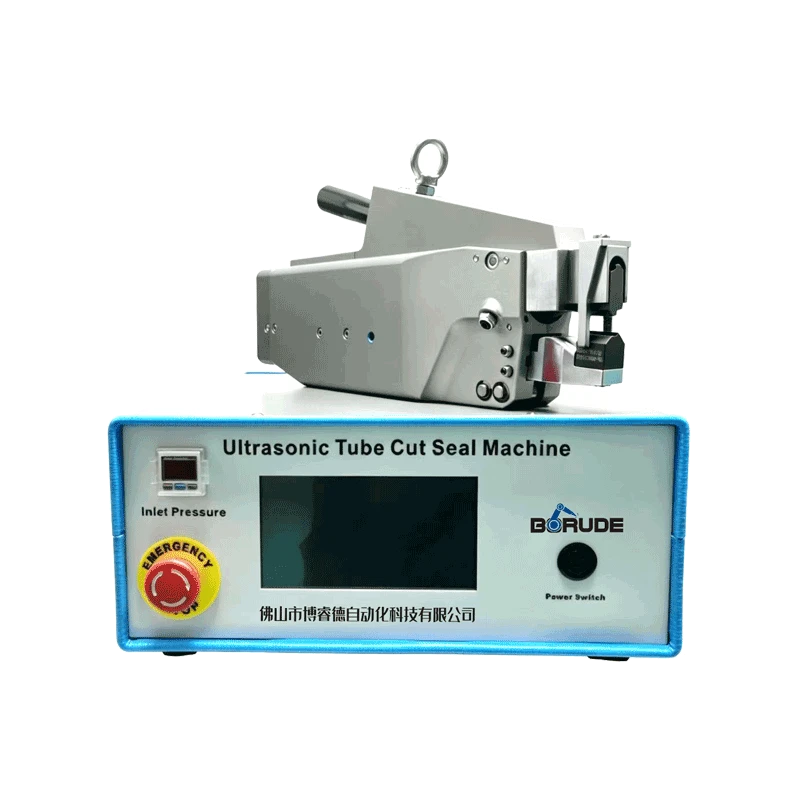
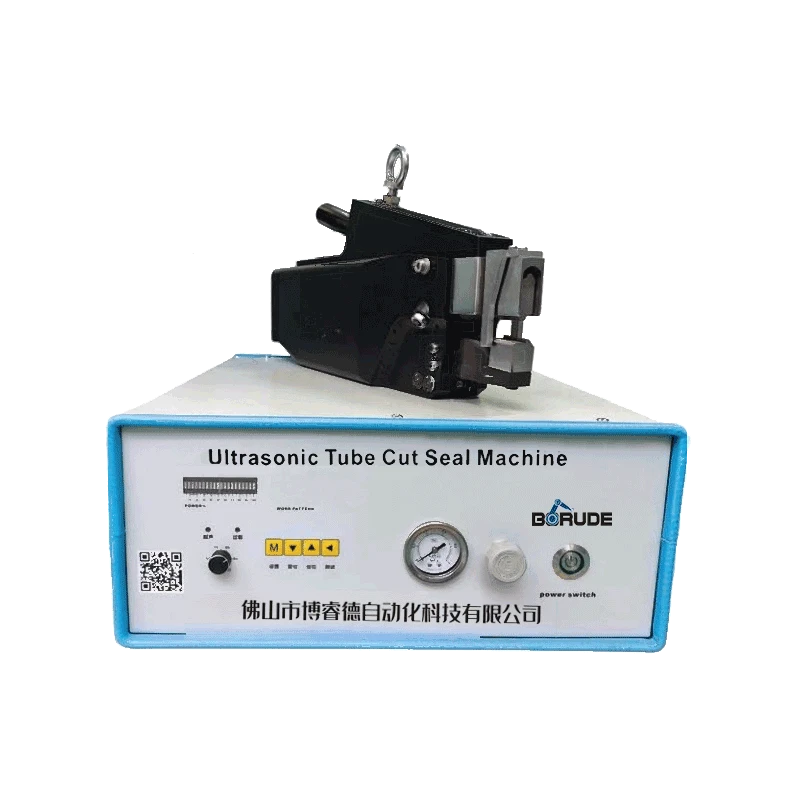
An ultrasonic metal welder joins the ribbon and terminal at 20 kHz with a sonotrode vibrating parallel to the interface under a controlled clamping force. The micro-motion disperses oxide and contamination, pressing clean metal into direct contact until the interface consolidates into a continuous solid-state bond. Nothing melts. There is no solder layer in the current path, no flux to trap under the terminal, and no intermetallic phase to embrittle the joint. Contact resistance at a properly made ultrasonic ribbon joint approaches that of the parent metal — a meaningful number when a string current of 13 to 15 A crosses this single interface for decades.
The heat budget is the second advantage. Energy is delivered only at the weld interface, and the joint area stays below 150°C, so the polymer housing, the encapsulant edge and the diodes inside the box are never thermally stressed. There is no post-weld cleaning station, no flux smoke extraction, and no rework loop for wetting defects. Tin-plated ribbon welds directly without stripping — the plating disperses into the bond — and the same machine handles copper, aluminum and composite ribbon, which gives purchasing freedom to switch ribbon metallurgy without requalifying a soldering process.

3. Where the Process Sits on the Assembly Line
In a typical build, ribbon ends exit the laminate, are bent into position, and are welded to the terminal inserts of the junction box before the box is bonded and the cable gland torqued. The weld station sits naturally after bending and before adhesive dispense: cycle time per weld runs one to three seconds, so a two-ribbon box adds only a few seconds of station time, and the operator needs no welding certification — parameter sets are locked by recipe, and a closed-loop system verifies energy, force and displacement on every weld.
That per-weld data matters for a product sold on a 25-year power guarantee. Energy, force and displacement records for each termination can be exported to the plant quality system, giving audit evidence that box number so-and-so received a joint inside tolerance — the kind of traceability that end-of-line electrical testing alone cannot provide, because a cold joint passes a flash test at room temperature. The same ultrasonic terminal welder platform that serves junction box work also covers busbar tabs, cable lugs and foil stacks, so a manufacturer serving both module and balance-of-system customers consolidates on one machine family and one qualification procedure.
4. Beyond the Box: Absorber Plate and Collector Welding
The same physics solves a parallel problem in solar thermal manufacturing. In a flat-plate collector, copper riser tubes must be joined to the absorber sheet with minimal thermal resistance between plate and fluid; brazing the full seam heats the selective coating past its stability limit and adds flux that corrodes the joint over time. Ultrasonic solar welding bonds the tube to the absorber below 150°C, preserving the coating, producing a direct copper-to-copper metallurgical bond with low thermal resistance, and handling aluminum-to-copper joints where a flame process would form brittle intermetallics. Producers running both PV module and collector lines can therefore cover ribbon terminations, busbar tabs and absorber seams with one welding technology and one supplier.

5. Specification Checklist for Junction Box Manufacturers
Before comparing quotations for a PV ribbon welding machine, settle six points with each supplier. First, the weld range: your ribbon cross-sections and terminal geometries, in tin-plated and bare copper, with samples of your own parts welded in the trial. Second, thermal evidence: measured interface temperature below 150°C at your thickest ribbon stack, documented, not claimed. Third, closed-loop control of amplitude, force and energy per weld, with out-of-tolerance alarms that quarantine a suspect joint automatically. Fourth, data export in a format your MES or quality system ingests, recorded per weld and traceable to the module serial number. Fifth, tooling economics: expected welds per horn regrind on your exact terminal, regrind cost and turnaround time. Sixth, the qualification package — tensile pull values, microsections and resistance measurements against your acceptance limits, on your ribbon and your terminals, before any purchase order is signed.
Contact Borude for a Ribbon Welding Trial
If your line attaches junction boxes, terminates ribbon to busbar, or welds absorber plate to riser tube, Borude will weld your own ribbon and terminal samples and return them with pull tests, microsections and resistance data for your qualification file. Browse our ultrasonic welding applications across solar, battery and wire processing, or send your ribbon drawings and terminal specification through the contact page to arrange an application trial with our engineers.


