


 Home
Ultrasonic Tube Sealing for Medical and Pharmaceutical Devices | Borude
November. 03,2026
Medical and pharmaceutical equipment does not tolerate the shortcuts that ordinary refrigeration manufacturing sometimes gets away with. A laboratory freezer, a vaccine cold-chain unit, a medical gas delivery device or a bioprocess system all depend on small-bore metal tubes that must stay leak-tight for a decade or more — and the factory that seals those tubes increasingly cannot use a flame, a brazing rod or a drop of filler alloy anywhere near the product. This is exactly the gap an ultrasonic tube sealer was built to fill. This guide covers where ultrasound is replacing flame processes in medical and pharmaceutical manufacturing, what the application demands, and how to specify a copper tube sealing machine for a validated, low-contamination line.
1. Why Medical Manufacturing Cannot Sealed-Tube with a Flame
The traditional way to close a process tube after charging a refrigeration circuit is to pinch it, heat it with a torch and let the copper collapse into a fused bead. A medical device plant has four problems with that. Open flame and cleanroom-classified areas are natural enemies: fumes, particulate and heat load violate the environmental limits the quality system is audited against. Brazing introduces flux and filler alloy, and residue inside a tube that carries refrigerant past a vaccine load or a patient-facing device is a contamination risk. A torch joint is also an operator skill — two people sealing the same tube produce measurably different beads, the opposite of what a design-validation file wants to see. And because medical products are small and densely packed, a flame that adds 300 °C to a copper tube also heats the sensor, wiring and housing centimetres away.
An ultrasonic tube sealer removes all four at once. Solid-state vibration under controlled pressure forms the joint with no flame, no flux, no filler and no consumable; heat stays inside the weld zone far below torch levels; and every weld runs from the same stored parameter recipe, so the joint an auditor samples on Monday matches the one the line made at midnight. For a manufacturer working under ISO 13485 or GMP expectations, that repeatability with records is usually what turns the first evaluation machine into a full-line rollout.
2. Where Ultrasound Seals Tubes in Medical and Pharma Products
The application list is broader than most buyers expect. Medical and laboratory refrigeration — blood bank refrigerators, pharmacy-grade freezers, ultra-low temperature freezers — uses the same capillary and process tubes as domestic appliances, but with far tighter leak and cleanliness expectations. Ultrasonic sealing closes those copper and aluminum tubes after refrigerant charging without flux residue that could contaminate a compressor system. Pharmaceutical cold-chain equipment relies on the same sealed circuits, where one micro-leak silently destroys a batch of temperature-sensitive product worth more than the welder itself.
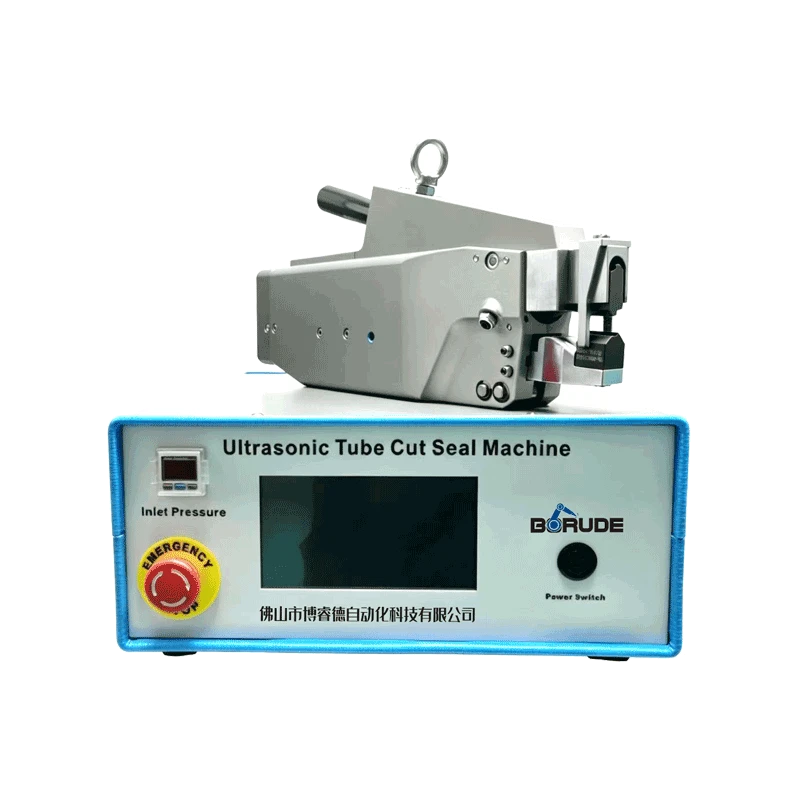
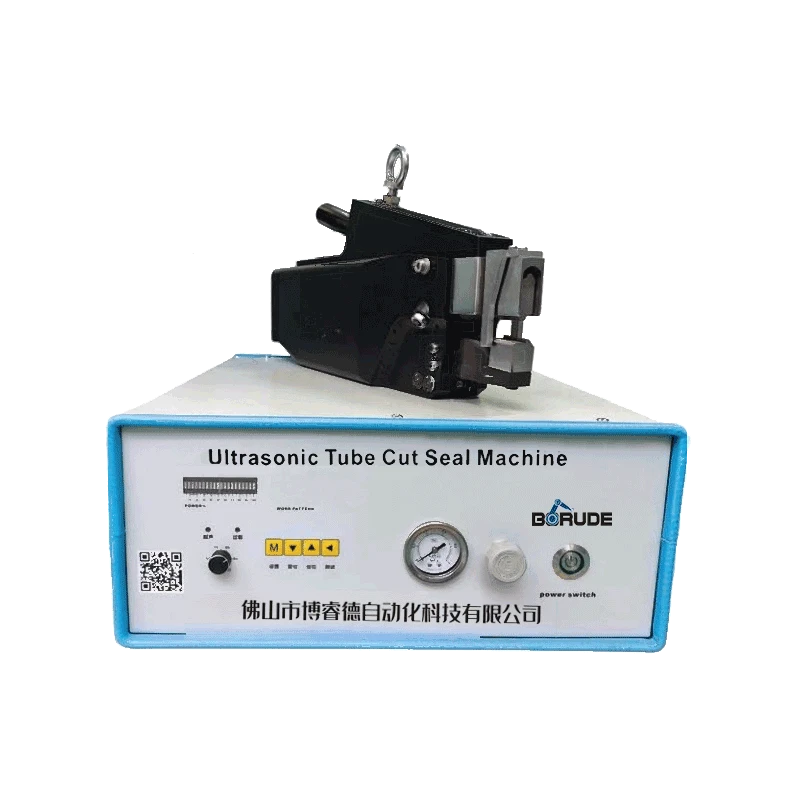
Beyond refrigeration, small-bore sealing appears in medical gas components, vacuum and sampling lines in analytical instruments, and process tubes on bioprocessing and lyophilization equipment that must be permanently closed after fill or evacuation. In every case the requirements are identical: a hermetic, particle-free joint in copper, aluminum or thin stainless tube, without heat damage to adjacent components, documented weld by weld. A bench-top tube sealing machine covers these joints in a few seconds per tube — throughput that matters at thousands of units per shift.

3. What the Joint Must Prove: Leak Rate, Cleanliness, Validation
A medical or pharmaceutical customer does not buy a weld; it buys evidence, in three forms. The first is hermeticity: a sealed process tube on medical refrigeration equipment is typically leak-checked with helium or traced with long-term pressure-decay testing, and the ultrasonic weld must hold a leak rate far below what a visual torch bead can guarantee. Because ultrasound fuses the tube wall into a single solid-state mass — no porosity, no flux inclusions — the joint passes these tests with margin, shift after shift.
The second is cleanliness of the surrounding process. The weld is a dry solid-state process: no combustion gases to extract, no oxide scale to clean, no flux to wash, no consumable inventory to lot-control. The third is data. Modern ultrasonic welding applications in regulated industries are specified with closed-loop control and per-weld records — energy, force, displacement and amplitude for every joint — so the weld log becomes part of the device history file. When an auditor asks how tube 10,483 is proven to match the validation sample, the answer is a database query, not an argument.
4. Specifying a Tube Sealer for a Medical Production Line
Selecting a copper tube sealing machine for this sector follows the same engineering logic as any other, with three sector-specific twists. Start with the tube — diameter, wall thickness, material. Small-bore copper capillary in the 3–8 mm range is the standard case for an ultrasonic tube cut seal machine, which crimps and welds the tube end in one cycle; thin-wall stainless and aluminum require validated tooling and recipes, so state them upfront. Second, decide the control tier deliberately: a regulated line should budget for closed-loop welding modes and weld-data export from day one, because retrofitting traceability later costs more. Third, treat tooling life like a pharmaceutical input material: ask for guaranteed welds per regrind on your exact tube, the price of a replacement horn and anvil set, and the regrind turnaround.
Finally, verify the supplier can support the qualification itself. A manufacturer supplying medical and pharma lines should deliver documented tuning of the acoustic stack, IQ/OQ-supporting test data on your tube samples, and parameter documentation your quality team can file. Our frequently asked questions page outlines what a proper application trial on your own tubes should include before any purchase order.

5. From Flame Line to Ultrasonic Line: What Changes on the Floor
Manufacturers that make the switch report the same three changes. Operators no longer need a brazing certification: the machine loads a preset recipe and executes the same weld every cycle, so training drops from weeks to hours. Consumable purchasing simplifies — no gas, no rod, no flux, only the eventual tooling regrind — and the fire-safety footprint of the station shrinks to nothing, simplifying insurance and audits. And because the weld is a cold solid-state joint, downstream components a torch would have cooked — sensors, seals, harnesses, plastic housings — survive untouched.
The economic case closes quickly. Energy per weld falls by an order of magnitude compared with brazing; scrap from burned or contaminated joints disappears; and weld data eliminates the re-inspection sampling that flame processes force on regulated lines. Borude builds ultrasonic metal welders and tube sealing systems for refrigeration, appliance and industrial manufacturers, and holds that same discipline — in-house tuned acoustic stacks, application trials on your real tubes, export-ready documentation — for its medical and pharmaceutical customers. If your line still seals small-bore tubes with a flame, send us a sample tube and your leak-rate specification.

Contact Borude for a Medical Tube Sealing Trial
Whether you manufacture laboratory refrigeration, pharmaceutical cold-chain equipment or medical gas devices, Borude can demonstrate an ultrasonic tube sealer on your own copper, aluminum or stainless tubes and provide the weld data your quality system needs. Visit our contact page to request an application trial — and put a flame-free, validated tube sealing process on your line.


