


 Home
Ultrasonic Welding Machine Price: What Drives Cost | Borude Guide
November. 02,2026
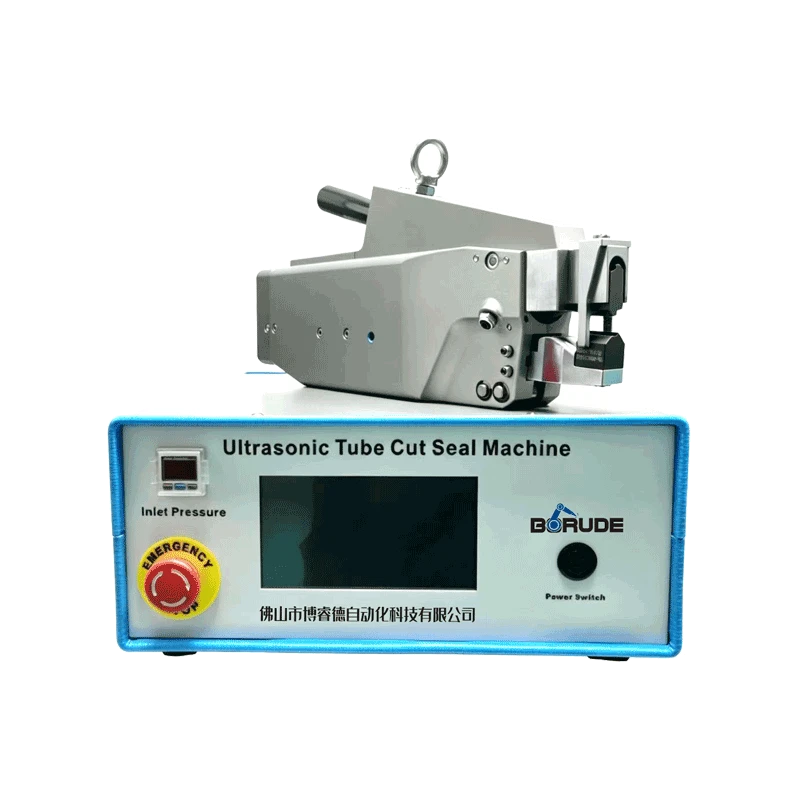
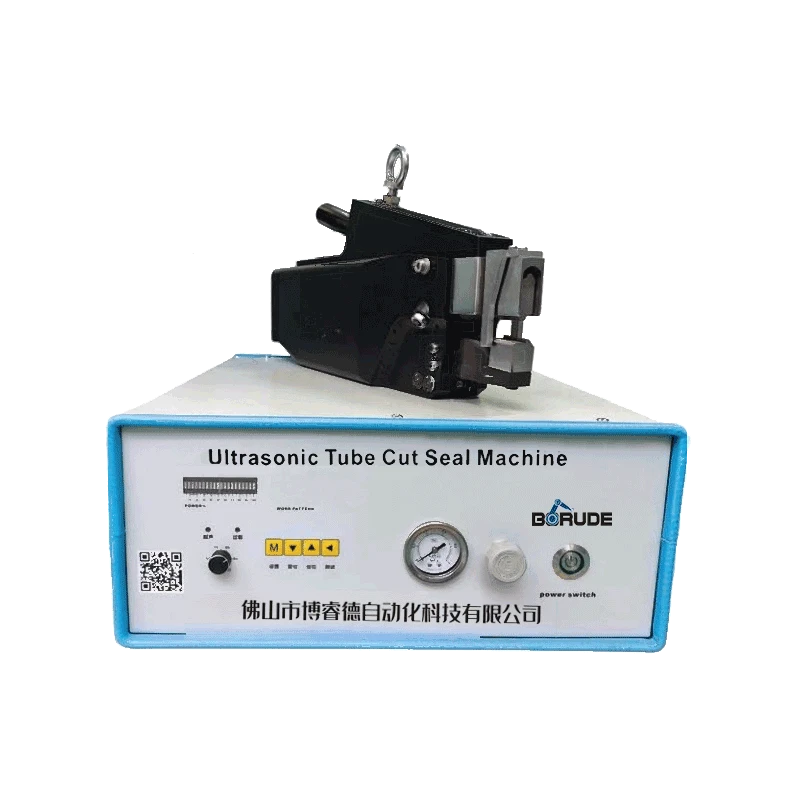
The first question most buyers type into a search engine is about ultrasonic welding machine price — and the first quotation they receive is often the least useful number in the whole project. Two machines with similar cabinets and similar power ratings can differ by a factor of three in real cost of ownership, because the price of an ultrasonic welder is driven by parts that are invisible in a product photo: the tuned acoustic stack, the control philosophy, the tooling that contacts your part, and the engineering behind the parameter recipe. This guide breaks the price of an ultrasonic tube sealer or terminal welder into its real components, so you can compare quotations line by line instead of comparing boxes.
1. The Acoustic Stack: The Core of the Price
Inside every ultrasonic metal welder sits a resonance chain — transducer, booster and horn — tuned as a system to a single frequency, usually 20 kHz or 35 kHz. This chain is the single largest cost driver, and the differences between suppliers are engineering differences, not cosmetic ones. Piezoelectric ceramic grade, how precisely the stack is tuned before shipment, and whether the sonotrode is machined in-house for your specific joint all move the price. A stack that arrives pre-tuned and documented holds its frequency through years of thermal cycling; a stack assembled from catalogue parts drifts, loses amplitude at the working face, and produces cold welds long before anything visibly fails.
When you compare quotations, ask what is inside this part of the price: the ceramic supplier, the amplitude actually delivered at the horn face, the frequency tolerance after run-in, and whether the horn drawing belongs to you. A quotation that is silent on the stack is quoting the enclosure, not the process.
2. Control Level: From Timer to Closed Loop
The second price band is decided by how the machine controls the weld. Entry-level units weld by time and power setting alone — adequate for forgiving joints, blind to drift. Mid-range machines add closed-loop control of weld force and amplitude, plus energy or displacement-based welding modes, which stop the weld when the joint has reached a measured state rather than when a timer expires. The top band adds per-weld data capture: force-displacement curves, weld-by-weld records, exportable logs for traceability in automotive, battery and refrigeration quality systems.
This is where ultrasonic tube sealer pricing diverges most visibly from commodity welders. A sealed tube end on a refrigerator or heat pump must hold a helium leak rate for fifteen years; the control system that guarantees repeatability is worth more than a slightly larger cabinet. Decide early which quality regime your product lives under, because paying for closed-loop control you do not need wastes budget, and skipping it on a leak-critical joint costs far more in field failures.

3. Tooling: The Part of the Price That Touches Your Product
Every ultrasonic weld is made by a horn and an anvil shaped for a specific joint — a tube diameter, a terminal cross-section, a busbar thickness. Tooling is therefore quoted per application, and it is a recurring cost, not a one-off: sonotrodes wear, get reground a limited number of times, and eventually retire. The honest way to compare prices is cost per weld over tooling life, not the tooling invoice itself. In our experience a well-managed tooling set amortises to a fraction of a cent per weld on high-volume joints, while a poorly specified one can double the consumable budget of a line.
Ask each supplier three questions: what is the price of the tooling set, how many welds per regrind do they guarantee for your material, and what does a replacement set cost. A ultrasonic terminal welder supplier who publishes these numbers is confident in the metallurgy behind them. A supplier who answers "depends" without offering a life test on your parts is transferring the risk to you.
4. Automation and Integration: Paying for Cycle Time
A bench-top machine and an automated weld cell can share the same stack and generator, yet differ enormously in price — and the difference buys throughput, not weld quality. Rotary tables, servo-driven loading, inline part presence checks and MES or PLC integration all add cost that only pays back if your volume justifies the cycle time. A practical rule: buy the machine class your annual volume requires, and buy process control above that level. A refrigeration factory sealing thousands of capillary and process tubes per shift needs automation and data; a repair shop doing field service needs a portable tube sealer with repeatable presets and nothing more. Overbuying automation is one of the two most common ways buyers overspend; the other is underbuying process control and paying for it in scrap.

5. The Costs Outside the Quotation
Three cost items rarely appear on the first page of a quotation but always appear in the budget. First, commissioning and training: parameter development on your parts, operator training, and documentation. Second, spare parts: a spare transducer, generator boards and a tooling set in reserve are cheap insurance against line stoppage; buying them later, urgently, from overseas costs multiples. Third, service response: remote diagnosis, parameter support and regrind turnaround define how much a wear event actually costs you in downtime. When you compare an import price against a domestic one, or two importers against each other, normalise for these three items — the machine with the lowest sticker price and no service network behind it is frequently the most expensive machine in the fleet within two years.
Energy belongs in the same calculation. Ultrasonic welding consumes a small fraction of the energy of brazing or soldering for the same joint, and the saving compounds across every shift; our earlier guide to frequently asked questions covers typical energy and consumable comparisons in detail.

6. How to Get a Price You Can Actually Use
A generic enquiry returns a generic, padded price. To get a quotation that reflects your real requirements, send the supplier the joint itself in writing: material and cross-section or tube diameter and wall thickness, the joint type (closed tube end, lap weld, splice, busbar), the required result (leak rate, pull strength, resistance), your cycle time target, and annual volume. With this information a manufacturer can specify the stack, quote the correct tooling geometry and propose a control level — and the price becomes comparable between suppliers because the specification is fixed. Without it, every quotation is priced against a different, invisible assumption, and the cheapest one is usually the thinnest specification.
Finally, tie the price to a sample weld trial on your own parts, with acceptance criteria agreed in advance. It converts the quotation from a promise into a measured result, and it is the single cheapest risk-reduction step in the whole purchase.
Request a Quotation From Borude
Borude designs and manufactures ultrasonic metal welders, ultrasonic tube sealers and terminal welding systems in Foshan, Shunde, and supplies refrigeration, HVAC, battery and appliance manufacturers worldwide. Every quotation is built from your joint specification: stack selection, tooling price with expected welds per regrind, control level matched to your quality regime, and the spare-parts list for two years of operation. Send your tube dimensions, conductor cross-sections or joint drawings through the Borude contact page and receive a priced tooling proposal with sample welds on your own parts — or browse the application index to see how the process performs in your industry before you compare prices.


