


 Home
How to Evaluate an Ultrasonic Welding Machine Supplier: A Borude Qualification Checklist
October. 30,2026
Every ultrasonic welding machine supplier looks competent from a catalogue. Power ratings are comparable, cabinets are comparable, and the quotation arrives within two days. The differences that decide whether the machine still holds weld quality in year five are invisible at that stage: whether the tooling was designed for your joint, whether the stack is tuned as a system, whether process data is captured, and whether spare horns and service exist three years after delivery. This guide sets out a qualification sequence that separates manufacturers from assemblers, and it works equally for a copper tube sealing line, a terminal welder or a wire splicing station.

1. Judge the Supplier by the Questions It Asks
The first filter costs nothing. Send an enquiry describing the joint and watch the reply. A supplier that engineers ultrasonic joining will ask for conductor material and cross-section, whether the joint is a lap weld, a splice or a closed tube end, the required pull strength or leak rate, the cycle time budget, and the condition of the parts as they arrive — oxide, drawing compound, burrs. It will ask what the joint must survive: thermal cycling, salt spray, vibration.
A supplier that only asks for quantity and voltage is quoting a box, not a process. Ultrasonic welding is a solid-state process in which amplitude, force, time and tooling geometry interact; the same 20 kHz generator produces good welds on one joint family and cold welds on another. If the enquiry reply contains no question about your workpiece, treat the price as the price of a machine that may never make an acceptable part.
2. Six Capabilities That Separate Manufacturers From Assemblers
In-house stack design. The transducer, booster and horn form a tuned chain. A real manufacturer designs and machines sonotrodes to a specific joint, and can explain amplitude at the working face rather than only at the generator.
Tooling fabrication and reconditioning. Ask where the horn is made and how it is reground. A supplier that cannot recondition its own tooling leaves you buying complete sets forever.
Process control, not just timers. Force, amplitude and displacement should be closed-loop and logged per weld. Weld-count-only controls hide the drift that produces scrap.
Fixture and automation capability. The weld is made by the fixture as much as by the horn. Suppliers who build rotary tables, servo slides and inline handling can hold position repeatability; those who cannot will hand the integration problem back to you.
Application library. Years of joints across refrigeration, automotive, battery and appliance work show up as recommended parameters for your material combination, including copper-to-aluminium.
Export documentation and compliance. CE marking with a technical file, UL-recognised components where the destination market requires them, English manuals, and a declared spare-parts list are the minimum for a machine that will run outside the supplier's home market.

3. The Factory Audit: Five Things Worth Inspecting
A video call or a visit answers questions a brochure cannot. Ask to see the machining area where horns and anvils are produced, and look at whether the equipment matches the claimed tolerance — a supplier that buys tooling from a third party will change the subject. Ask to see an assembly and run-in bench, because every stack should be tested for frequency and amplitude before shipment. Ask how incoming components are inspected, particularly piezoelectric ceramics and power modules. Ask for the weld parameter records of a machine currently in build, which shows whether data capture is real practice or a feature list. Finally, ask to meet the engineer who will handle your application, not only the salesperson.
One further check is unusually revealing: request the drawing or specification of a horn the supplier has already made for a customer in your industry. Suppliers who design tooling hold these records; resellers do not.
4. The Sample Weld Trial: Set Acceptance Criteria First
Never approve a supplier on a demonstration weld made on their own sample parts. Send your production parts — the real ones, in the real surface condition — and define acceptance before the trial starts. For a terminal or splice: minimum pull strength and the failure mode (wire break outside the weld is the correct result, weld interface failure is not), plus cross-section appearance at the specified compression. For a copper tube sealing application: burst or helium leak rate, seal dome geometry, and no cracking after thermal cycling. For a busbar: resistance across the joint and a peel test on a coupon.
Then require a capability run, not a single good part. Ask for 30 to 50 consecutive welds at fixed parameters with the strength results plotted, plus the process window — the amplitude and force range over which the joint still passes. A narrow window means the process is fragile and will drift in production; a wide window means the tooling was designed properly. Ask also for the cycle time achieved and the energy consumed per weld, because both feed the business case.

5. Commercial Terms That Reveal Engineering Confidence
Pricing structure tells you how the supplier thinks about its own product. Ask for tooling price and expected weld count per regrind, spare transducer and generator pricing, recommended spare-parts stock for two years of operation, warranty terms that distinguish consumable tooling from defects, training format, and response time for remote diagnosis. A manufacturer that publishes these numbers expects its machines to run for a decade. A supplier that answers vaguely is pricing for the first invoice only.
Delivery and commissioning deserve equal scrutiny. Confirm who writes the parameter recipe for your part, whether acceptance happens at the supplier's plant or yours, and what documentation arrives with the machine: electrical drawings, pneumatic diagrams, parameter records, maintenance schedule and a tooling life ledger template. On a multi-station line, the difference between a documented handover and an undocumented one is measured in months of ramp-up.
6. Red Flags Worth Walking Away From
Be cautious when the answer to every technical question is a higher power rating, when tooling is described as universal, when the sample weld was made on different stock than yours, when no process data can be exported, or when the only warranty term offered covers the cabinet and not the stack. Each of these signals that the supplier sells equipment rather than joins metal, and the cost appears later as scrap, downtime and tooling replacement.
Qualify Borude Against This Checklist
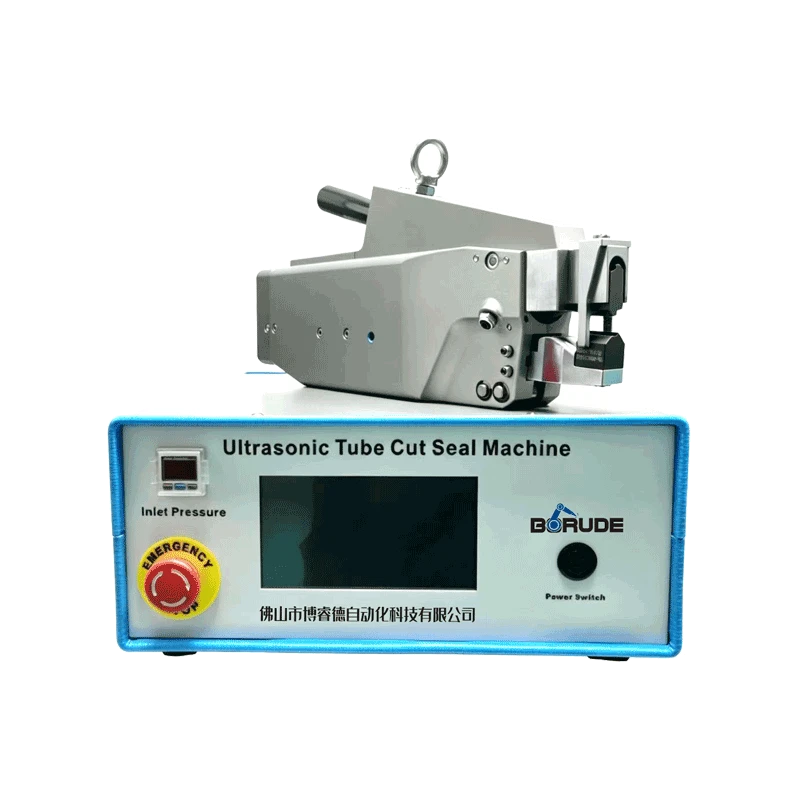
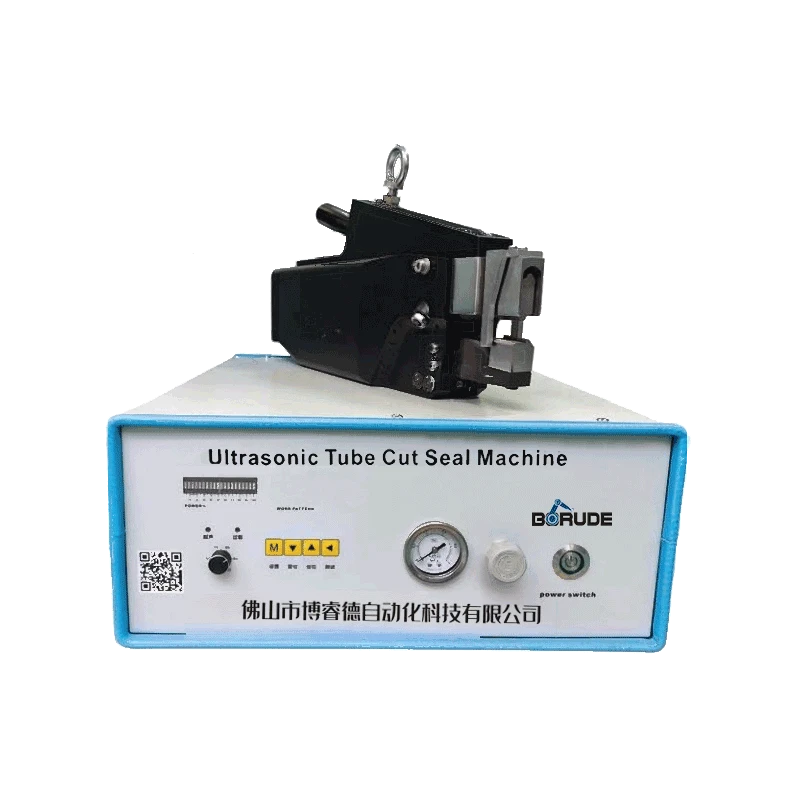
Borude builds ultrasonic metal welders, ultrasonic tube sealers and wire splicing systems in Foshan, Shunde, and exports to Mexico, Russia, Vietnam and Tunisia. The company designs and machines its own sonotrodes, tunes each stack before shipment, and supplies the tube sealing and terminal welding platforms used on refrigeration, HVAC, battery and appliance lines. Send joint drawings, conductor cross-sections or tube specifications with your enquiry and Borude will return a tooling proposal, a parameter recommendation and sample welds on your own parts. Contact Borude to start a qualification trial, read the frequently asked questions for specification details, or browse the industry application index to match the process to your production line.


