


 Home
Ultrasonic Welding Horn and Anvil Life: Tooling Cost Management Guide | Borude
October. 29,2026
When manufacturers compare joining processes, machine price dominates the conversation and tooling is treated as an afterthought. In ultrasonic metal welding that accounting is backwards. The ultrasonic welding horn — the sonotrode — and its opposing anvil are the only genuine consumables in the system, and how they are specified, monitored and managed decides the true cost per weld over the life of the machine. A buyer who models tooling correctly before purchase often reaches a different conclusion than one who compares power ratings alone. This guide explains what actually wears, why it wears, how to calculate cost per weld, and how to run a tooling programme that keeps weld quality locked in for years.

1. What Actually Wears: Anatomy of the Welding Stack
An ultrasonic metal welder is a tuned mechanical chain: electronic generator, piezoelectric transducer, booster, and the sonotrode that carries the working amplitude at 20 kHz. The workpiece sits on the anvil. Each element is tuned to resonate at the same frequency, which is why tooling is not a generic spare part — a horn is designed for a specific joint family, cross-section range and amplitude.
Wear concentrates at two contact faces. On the sonotrode, the knurled or toothed working face that grips the top workpiece loses tooth height and edge sharpness as it scrubs against copper or aluminium thousands of times per shift. On the anvil, the opposing face wears where metal flows under weld force. The transducer and booster, protected behind the horn, age far more slowly; treating them as part of the tooling budget is a common and expensive mistake.

2. The Four Wear Mechanisms That Shorten Horn Life
Adhesive galling. Copper is soft and sticks to hard tool steel under pressure and vibration. Each weld transfers microscopic copper to the horn face; the deposits grow, change the local friction and eventually tear the weld surface when they break loose.
Abrasive scoring. Oxide and debris from the wire or busbar surface embed between the faces and grind them like lapping compound. Dirty, drawing-compound-contaminated conductor shortens horn life dramatically compared with clean stock.
Over-amplitude fatigue. Running amplitude higher than the joint requires accelerates tooth loss and can initiate fatigue cracks at stress risers. Amplitude must match the joint, not compensate for a weak clamping fixture or a dull anvil.
Mechanical damage. Cross-threaded horn mounting, incorrect torque, anvil misalignment and horn strikes against the anvil with no workpiece in between account for a large share of premature tooling failures — all preventable with procedure, not budget.
3. Cost Per Weld: The Number That Decides Everything
Tooling economics only look bad until they are calculated. A simple model: a horn-and-anvil set priced at 450 US dollars, rebuilt by regrinding four times, delivering roughly 25,000 welds per life. That is 125,000 welds per set, or 0.0036 dollars per weld. Add scrap from welds rejected due to worn tooling and the changeover minutes per regrind, and the figure stays in the same range — a rounding error beside the labour and energy of the processes it replaces.
The contrast matters. Resistance and fusion methods consume electrodes, filler, gas and flux continuously, and their quality drifts with every consumable change. Ultrasonic tooling cost is front-loaded, predictable and visible — which is exactly why it should be tracked instead of ignored. Buyers evaluating an ultrasonic metal welder should ask suppliers for tooling pricing and expected weld counts per regrind at quotation stage, because that disclosure reveals how confident the manufacturer is in its own wear engineering.
4. Running a Tooling Life Ledger
The plants that get the lowest tooling cost all run some version of the same record. Assign every horn and anvil set an ID and log the weld count per set, the joint family it serves, every regrind, and the displacement or energy readings at the end of each life. Modern machines make this nearly automatic: the controller stores energy, force and displacement for every weld, and a slowly rising displacement at constant settings is the earliest fingerprint of a dulling horn face — visible weeks before welds start failing pull tests.
Three practices follow directly from the ledger. Rotate sets on a schedule instead of running one set to failure, because a failed horn scraps product and stops the line while a rotated set never does. Budget regrinds with the same lead time as raw material, so a rebuild is an event on the calendar rather than an emergency. And retire a set by measurement, not optimism: when tooth height loss or displacement trend passes the supplier's limit, the set moves to low-value work or out of service entirely.

5. Machine Features That Extend Tooling Life
Horn life is set jointly by the tooling and the machine that drives it. Four capabilities protect the investment. Amplitude closed-loop control holds vibration constant even as the line voltage and tooling condition change, removing the over-amplitude failure mode. Force and displacement monitoring per weld gives the ledger its data and alarms on drift before scrap appears. Rigid, accurately machined tooling interfaces keep the stack aligned so wear lands where the geometry intends, not on a horn thread. And fast tool changes — on machines such as the Borude BRD-7A terminal welding platform, engineered with welding head life beyond 60,000 cycles and interchangeable tooling for copper 4–70 mm² and aluminium 20–100 mm² — turn the rotation schedule from a burden into routine housekeeping.
Ask every supplier the same four questions: what weld count per regrind can the tooling reach on my joint, what does a spare set cost, how is the horn face reconditioned, and what per-weld data does the controller export. A manufacturer that answers all four with numbers has already done the tooling engineering; one that answers in adjectives has not.
6. Beyond Terminals: Tooling Across the Product Range
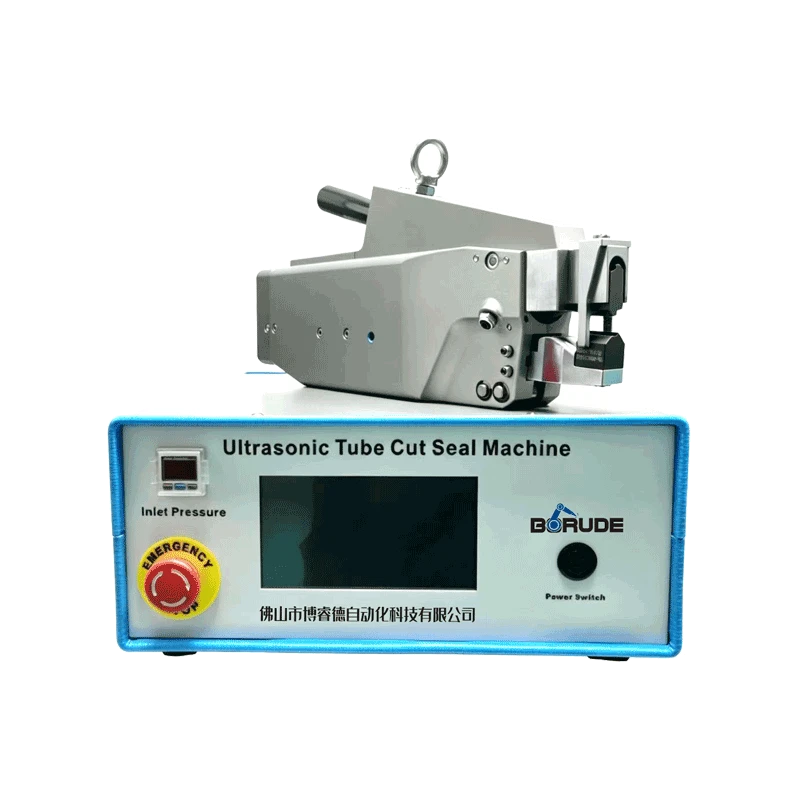
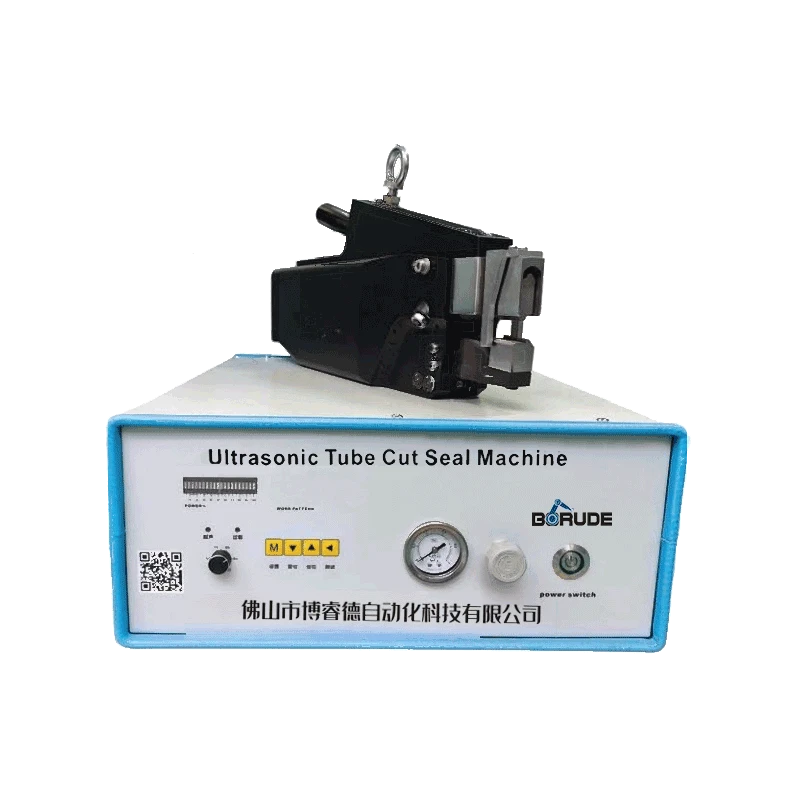
The same discipline transfers across Borude's product lines. Ultrasonic tube sealer tooling — the sealing horn and anvil that close copper tube ends on refrigeration assemblies — follows identical wear logic, with the added demand of leak-tight seal geometry. Wire splicing and battery busbar tooling carry their own joint-specific profiles. Because all of these run on the same 20 kHz platform principles, one consistent tooling management programme covers the entire ultrasonic fleet in a plant.
Model Your Tooling Before You Buy
Bring the tooling conversation into the machine conversation. Send Borude your joint drawings, conductor cross-sections and current joining process, and the engineering team will return tooling pricing, expected weld counts per regrind and sample welds on your own parts — the exact inputs a cost-per-weld model needs. Borude manufactures ultrasonic metal welders, tube sealers and wire splicing systems in Foshan, Shunde, and exports to Mexico, Russia, Vietnam and Tunisia. Contact Borude for a tooling and machine quotation, or browse the industry application index to see the process in your sector.


